Let’s dive into this fascinating topic.
What is Yarsagumba or Keeda Jadi?
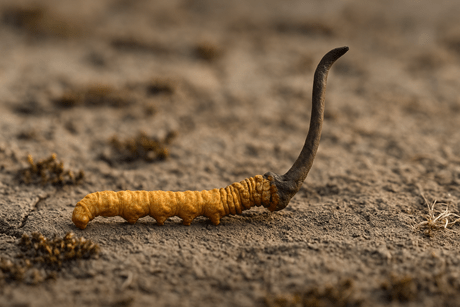
Yarsagumba is a natural mix of a dead caterpillar and a living fungus. In winter, a fungus attacks a specific type of caterpillar that lives underground. The fungus kills it, and during summer, a brown stick-like fungus grows out of the insect’s body. That combination becomes Yarsagumba.
That’s why it’s called:
Keeda Jadi in Hindi (कीड़ा-जड़ी), meaning “insect herb”
Caterpillar fungus in English
Cordyceps Sinensis in scientific language
Himalayan Viagra, because of its aphrodisiac properties
Where is Yarsagumba Found in the Himalayas?
Yarsagumba is found in high-altitude Himalayan meadows between 3,500 to 5,000 metres. You can’t grow it on farms. It only grows in cold alpine regions above the tree line.
In India:
Uttarakhand – Munsiyari, Darma Valley, Johar Valley, Niti Valley, Malari, Mandal, Kedarnath Wildlife Zone
Himachal Pradesh – Pangi Valley, Kinnaur, Lahaul-Spiti
In Other Countries:
Nepal – Dolpa, Darchula, Mustang, Manang
Tibet
Bhutan
The collection season starts around May and continues till July, just before the monsoon.
Why is Yarsagumba So Expensive?
Yarsagumba is also called Himalayan Gold because of its price.
In international market, it sells for ₹10 to ₹20 lakh per kg
In Indian market, local traders buy it for ₹2 to ₹6 lakh per kg depending on quality
In villages, collectors may get ₹1,000 to ₹2,000 per piece (one small stick)
Only a few pieces are found per person per day — that too after hours of hard trekking and digging in high altitude meadows. That’s why it’s so costly.
Health Benefits (As Believed Traditionally)
Yarsagumba is used in traditional Chinese, Tibetan, and Himalayan medicine. People believe it helps in:
Boosting energy and stamina
Improving sexual power and fertility
Treating lung diseases, asthma, and chronic fatigue
Strengthening kidneys and liver
Recovering from cancer and TB (in traditional claims)
Because of these reasons, it is also called natural Viagra.
But remember: Modern science is still researching these claims. All benefits are not scientifically proven.
How Do People Collect Yarsagumba?
The collection of Yarsagumba is very difficult and risky.
Local villagers, especially from border areas of Uttarakhand and Nepal, trek high into meadows in May-June
They stay in tents and temporary shelters for 1–2 months
From morning to evening, they search for that tiny brown stick growing from the soil
They dig carefully — if the fungus breaks, its value drops
It’s a back-breaking job, mostly done by women and children too. But the income is so good that even schools remain closed in some Himalayan villages during Yarsagumba season.
Yarsagumba and Forest Permits in India
In Uttarakhand, Yarsagumba is found in Reserved Forests and Bugyals (meadows). So, villagers need to take a permit from the Forest Department.
A small fee is charged (around ₹100–500)
They also have to give some part of their collection to Van Panchayat or local bodies
Selling without permission is illegal
Government has put rules, but illegal smuggling still happens.
Problems and Challenges
Yarsagumba might be a blessing, but it also brings many challenges:
Over-harvesting: Due to high demand, people are collecting more than nature can grow
Climate change: Because of global warming, snowline is going up and affecting its natural growth cycle
No replacement: It can’t be farmed, and artificial Cordyceps is less effective
Fights and violence: In Nepal and Tibet, even fights and killings have happened in Yarsagumba zones due to greed
If this continues, Yarsagumba may become extinct in future.
Yarsagumba in Local Himalayan Life
In many Himalayan villages, Yarsagumba is now the main source of cash income. One good season can give villagers income equal to a full year’s farming.
But with that, problems like:
School dropouts
Over-dependence on collection
Clashes with forest staff
are also increasing.
Some NGOs and local leaders are now promoting eco-friendly collection practices.
Yarsagumba Alternatives & Duplicates
Beware! Many traders sell fake Keeda Jadi. Some use:
Painted sticks
Dried roots shaped like fungus
Artificial fungus from China
So always check before buying. In India, research labs are working on farming Cordyceps artificially, but it’s still not that effective.
Conclusion
Yarsagumba, or Keeda Jadi, is a natural wonder of the Himalayas. It has given Himalayan villagers a way to earn a living, but it has also created environmental and social challenges. If we want to enjoy its benefits in the long run, we must respect nature’s balance and follow sustainable ways of harvesting.
This unique herb is not just a medicine, it’s a story of the deep connection between Himalayan people and their mountains.
✅ Also Read:
Difference Between Inner Line Permit & Protected Area Permit in Himalayan Treks
Goechala Trek Itinerary – A Detailed Guide
How Tea Estates Developed in Darjeeling – A Detailed History