
Wangala Festival 2025 – The 100 Drums Harvest Celebration of Meghalaya’s Garo Tribe
– Mohit Bangari
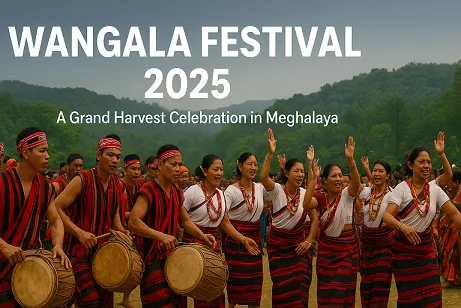
The Wangala Festival 2025, also known as the 100 Drums Festival of Meghalaya, is one of the most colourful harvest celebrations of Northeast India. It is mainly celebrated by the Garo tribe of Meghalaya to thank their Sun God – Misi Saljong, for a good harvest and blessings throughout the year.
This vibrant festival marks the end of the long farming season and the arrival of winter in the Garo Hills region. During Wangala, the sound of hundreds of drums fills the air, and the hills come alive with dance, music, and joy. The people dress in their traditional clothes, decorate their homes, and offer prayers to express gratitude for nature’s gifts.
The Wangala Festival is more than just a celebration — it is a symbol of unity, identity, and tradition for the Garo community. Every beat of the drum tells a story of their close relationship with the land and their ancestors.
In 2025, the main celebration of the Wangala Festival will take place on 7th and 8th November at Asananggre village near Tura in West Garo Hills, Meghalaya. Thousands of visitors, both local and international, gather here every year to witness this grand tribal festival.
Table of Contents
If you are planning to explore the cultural beauty of Northeast India, attending the Wangala Festival 2025 will surely be one of the most memorable experiences of your journey. It offers a perfect mix of traditional music, dance, food, and community warmth — a true reflection of Meghalaya’s rich heritage.
📜 History of Wangala Festival in Meghalaya
The Wangala Festival has deep roots in the history and culture of the Garo tribe of Meghalaya. It is one of the oldest harvest festivals in the region, celebrated to honour Misi Saljong, the Sun God, who is believed to bless the land with good crops, peace, and happiness.
Long ago, the Garos followed a traditional religion known as Songsarek, which teaches respect for nature and ancestral spirits. The Wangala Festival began as a simple thanksgiving ritual by farmers after harvesting their crops. They offered grains, fruits, and rice beer to Misi Saljong and prayed for fertility and prosperity for the next season.
Earlier, every Garo village used to celebrate its own Wangala separately. The village chief, known as the Nokma, would lead the rituals, and people would gather to sing and dance in his courtyard. Over time, this local tradition turned into a large community event that united different Garo villages.
In 1976, the first 100 Drums Wangala Festival was organized at Asananggre village near Tura to showcase this traditional celebration on a bigger stage. Since then, it has grown into a major cultural festival of Meghalaya, attracting visitors, photographers, and cultural researchers from across India and abroad.
Today, the Wangala Festival stands as a proud reminder of Garo heritage — a festival where ancient traditions, rhythmic music, and heartfelt gratitude come together under the open sky of the Garo Hills.
🌞 Significance of Wangala Festival
The Significance of Wangala Festival lies in its deep spiritual and cultural meaning for the Garo tribe of Meghalaya. It is not only a harvest festival but also a thanksgiving ceremony to the Sun God – Misi Saljong, who is believed to bring life, energy, and fertility to the land.
After months of hard work in the fields, the festival gives the farmers a chance to thank their deity for a good harvest. It also marks the end of the agricultural year and the beginning of a new season. For the Garos, Wangala Festival is a time of joy, sharing, and unity. It strengthens the bond between families, neighbours, and villages.
The rituals of Wangala reflect the Songsarek religion, the traditional faith of the Garos, which believes that humans and nature are deeply connected. During the celebration, people offer rice beer, cooked food, and grains to Saljong, showing gratitude for sunlight, rain, and the blessings of the earth.
The festival also highlights the identity of the Garo tribe, their customs, and traditional music and dance forms. The rhythmic beating of drums, colourful clothes, and cheerful faces together create an atmosphere of energy and happiness that touches every visitor.
In modern times, the Wangala Festival has become a major attraction for travellers and culture lovers. It represents the living heritage of Meghalaya and stands as one of the most beautiful tribal festivals of Northeast India.
📅 Wangala Festival 2025 Dates & Venue
The Wangala Festival 2025 will be celebrated on 7th and 8th November 2025. Every year, this grand celebration takes place after the harvest season when the farmers of the Garo tribe finish their agricultural work and prepare to thank their deity, the Sun God Misi Saljong, for his blessings.
The main venue of the festival is Asananggre village, located near Tura in the West Garo Hills district of Meghalaya. This village is known as the cultural centre of the Garo community and has been hosting the 100 Drums Wangala Festival since 1976.
During these two days, Asananggre becomes a vibrant stage filled with the beats of drums, dances, and cheerful faces. The surrounding hills echo with the rhythm of traditional Garo music, and thousands of locals and visitors join in the festivities.
Although the grand event takes place in Asananggre, smaller Wangala celebrations are also held in several villages across the Garo Hills. These local versions may vary slightly in rituals, but the purpose remains the same — to offer gratitude to nature and celebrate the spirit of togetherness.
If you are planning to explore Meghalaya in November, attending the Wangala Festival 2025 in Tura will give you a rare chance to experience the true colours of tribal life, traditional music, and local hospitality.
🔔 Traditional Rituals of Wangala Festival
The Wangala Festival is not only about music and dance but also about deep-rooted rituals and traditions that connect the Garo tribe with their land and the Sun God – Misi Saljong. These rituals are performed to thank the deity for a good harvest and to pray for peace and prosperity in the coming year.
The celebration usually takes place over two main days, known as Rugala and Kakkat.
🌾 Rugala Ceremony
The first day of the festival is called Rugala. It is held inside the house of the village chief, known as the Nokma. During this ceremony, the Nokma offers freshly brewed rice beer, cooked rice, and vegetables to Saljong, the Sun God. These offerings are a symbol of gratitude for the harvest received. The priest, called the Kamal, performs chants and blessings while the community watches with respect and devotion.
🪶 Kakkat Ceremony
The second day, known as Kakkat, is the main day of public celebration. This is when the entire community gathers in open fields to dance, sing, and play drums. The atmosphere becomes lively as the sound of more than a hundred drums (dama) fills the air. Both men and women wear their traditional Garo clothes and ornaments.
The Nokma ceremony continues with prayers and offerings, followed by cultural performances and community feasts. The rituals are performed to invite the blessings of Misi Saljong for future harvests and to keep the village safe from misfortune.
These sacred rituals are an important part of Garo culture in Meghalaya. They show how deeply the people respect nature and their ancestral traditions. Even in modern times, the Garos have kept these customs alive, making the Wangala Festival a living bridge between the past and the present.
Assam’s Charaideo Moidams, also called the pyramids of Assam, were recently recognized by UNESCO for their cultural and historical value. These mound-burials of the Ahom dynasty reflect the grand traditions of Northeast India’s past. Just like the Wangala Festival, they remind us how heritage and spirituality live together in the region’s identity.
🔗 Read full article
🥁 Wangala Dance & 100 Drums Performance
The Wangala dance is the heart of the 100 Drums Festival of Meghalaya. It is one of the most beautiful and energetic tribal dances of Northeast India, performed to honour the Sun God – Misi Saljong and to celebrate the success of the harvest.
When the sound of drums begins, the whole atmosphere of the Garo Hills comes alive. Men and women form two long rows — one of men and another of women — moving forward in perfect rhythm. The men beat the long, oval-shaped dama (drums) while the women dance gracefully to the beats. The rhythm of the drums, the blowing of buffalo horns, and the sound of gongs create a powerful musical harmony that can be felt deep in the heart.
The dancers wear colourful traditional clothes. Men wear a dhoti, gando (turban), and ornaments made of beads and shells, while women wear dokmanda (a wrap-around skirt), jainsem, and decorative jewellery. The feathered headgear adds to the charm and gives the dance a royal look.
The Wangala dance is not just for entertainment. It has spiritual meaning — each step and movement represents gratitude towards nature and ancestors. It also shows unity and teamwork among the people. The beat of the 100 drums (dama) reflects the pulse of the land, reminding everyone of the bond between the community and the earth.
Tourists who witness this dance often describe it as one of the most memorable experiences of their trip to Meghalaya. The rhythm, colours, and energy of the performers make the 100 Drums Performance a true cultural treasure of the Garo tribe.
🎨 Cultural Highlights of Wangala Festival
The Wangala Festival is not only famous for its drums and dance but also for its rich display of Garo culture and tradition. During these two festive days, the entire region of Asananggre near Tura turns into a colourful fair of music, art, food, and joy.
One of the most exciting parts of the festival is the local art and craft exhibition. Visitors can see and buy beautiful Garo handicrafts, such as bamboo baskets, handmade jewellery, woven shawls, and decorative items. These products are made by local artisans using natural materials and traditional techniques. Buying them not only supports local craftsmanship but also helps in preserving Garo heritage.
The festival is also a paradise for food lovers. Traditional Garo cuisine is served at several stalls, where you can enjoy authentic dishes like Jadoh (a rice and meat dish), Minil Songa (spicy pork curry), smoked meat, and fresh vegetables cooked with local spices. And, of course, no Wangala is complete without a sip of chu, the local rice beer that symbolizes friendship and celebration.
Apart from crafts and food, the festival ground hosts several traditional games and competitions. Locals take part in bamboo climbing, tug of war, and dance contests. Visitors also enjoy watching folk performances that tell old stories of the Garo ancestors.
Every corner of the Wangala Festival 2025 reflects the joy and creativity of the Garo people. From the rhythmic beats of drums to the smell of traditional food, it’s an experience that captures the heart of Meghalaya’s tribal culture.
The Saga Dawa Festival of Sikkim is one of the most sacred Buddhist festivals in the Himalayas. It marks the birth, enlightenment, and death of Lord Buddha. Monks chant prayers, lamps are lit, and people practice kindness and giving. Like the Wangala Festival, it spreads the message of gratitude and faith, showing how the people of Northeast India stay rooted in their ancient traditions.
🔗 Read full article
🌄 Tour Highlights – Wangala Festival Experience
If you are planning to attend the Wangala Festival 2025, get ready for a one-of-a-kind experience in the Garo Hills of Meghalaya. The festival is not just about watching performances; it is about feeling the rhythm, meeting the people, and becoming part of their celebration.
Here are some of the main highlights that make the 100 Drums Festival a memorable cultural journey:
🎶 Witness the 100 Drums Performance
The grand performance where more than a hundred drums (dama) beat together in harmony is the main attraction of the Wangala Festival. The energy of the dancers, the music, and the festive mood will make you forget time.
🪶 Enjoy Garo Dance, Music, and Rituals
You will see the traditional Wangala dance performed by men and women in colourful attire. The rituals led by the Nokma (village chief) give you a glimpse of ancient Garo spirituality and respect for nature.
🍛 Taste Authentic Garo Cuisine
The festival is a food lover’s delight. Don’t miss Jadoh, Minil Songa, smoked meat, and local snacks. The freshly brewed rice beer (chu) is also offered as part of the celebration.
🏡 Experience Garo Hospitality
Stay in local homestays around Asananggre village or Tura and enjoy the warm hospitality of the Garo people. Their kindness and simple lifestyle make every guest feel like family.
🏞️ Explore the Beauty of Garo Hills
The surroundings of Tura and Asananggre are full of scenic hills, waterfalls, and green landscapes. During your visit, you can explore nearby villages, try short treks, or simply enjoy the calm nature of Meghalaya.
Attending the Wangala Festival 2025 is not just a trip — it’s a beautiful cultural experience where you can dance, eat, laugh, and learn together with the Garo community.
🗓️ 5-Day Wangala Festival 2025 Itinerary
To help travellers experience the best of this colourful celebration, here’s a simple 5-day itinerary for Wangala Festival 2025. This plan covers your arrival, festival days, local sightseeing, and departure — giving you the complete taste of Garo culture and hospitality.
🚌 Day 1 – 6th November 2025: Arrival at Guwahati / Tura
Your journey begins with your arrival at Guwahati (Assam) or directly at Tura in Meghalaya. Enjoy a scenic drive through green hills and small villages of the Garo region. Once you reach your stay in Tura, relax and attend a short orientation session about Garo culture, local lifestyle, and the Wangala Festival traditions.
Overnight stay in Tura.
🥁 Day 2 – 7th November 2025: Opening Ceremony of Wangala Festival
Get ready to witness the grand opening ceremony at Asananggre village, near Tura. The festival begins with the beating of drums, folk songs, and the traditional Wangala dance. You can also taste authentic Garo cuisine and join in the joyous celebration with the locals.
Overnight stay in Tura.
🎶 Day 3 – 8th November 2025: Rituals, Cultural Shows & Sightseeing
On the second day, attend the main Kakkat ceremony where people offer prayers and perform rituals to honour Misi Saljong, the Sun God. Explore handicraft stalls, traditional outfits, and local art displays. Later, enjoy guided sightseeing around Tura, including nearby scenic viewpoints and markets.
Overnight stay in Tura.
🏡 Day 4 – 9th November 2025: Village Excursion & Cultural Interaction
Take a short trip to nearby Garo villages to interact with the locals. Enjoy storytelling sessions, music, and traditional games. This is a perfect day to experience community hospitality and learn about daily life in the hills.
Overnight stay in Tura.
🚗 Day 5 – 10th November 2025: Departure
After breakfast, check out and drive back to Guwahati. If time permits, stop at scenic spots along the way for photos or short sightseeing breaks. The journey ends, but the memories of the 100 Drums Festival stay with you forever.
This Wangala Festival tour plan offers the right balance between celebration, local experience, and relaxation. Whether you are a solo traveller, photographer, or culture lover, this 5-day itinerary helps you connect deeply with the traditions of Meghalaya’s Garo tribe.
Known as the Festival of Festivals, the Hornbill Festival of Nagaland celebrates the spirit and unity of the state’s many tribes. From folk dances and traditional music to crafts and local food, it’s a complete showcase of tribal culture — much like the Wangala Festival of Meghalaya. Both festivals highlight the diversity, pride, and community strength of Northeast India.
🔗 Read full article
🛣️ How to Reach Asananggre Village near Tura
The Wangala Festival 2025 will be held at Asananggre village, which is about 18 km from Tura, the main town of the West Garo Hills district in Meghalaya. Reaching the festival is quite easy, as Tura is well connected by road from Guwahati (Assam) and other nearby towns of Meghalaya.
Here’s a short Tura travel guide to help you plan your journey 👇
✈️ By Air
The nearest airport to Tura is Lokpriya Gopinath Bordoloi International Airport, Guwahati (Assam), located around 220 km away. From Guwahati, you can hire a private cab or take a shared taxi to Tura. The drive takes about 6–7 hours, offering beautiful views of hills, rivers, and villages along the way.
You can also fly to Shillong Airport (Umroi), but flights there are limited. From Shillong, Tura is around 320 km by road.
🚆 By Train
Tura does not have a railway station. The nearest railhead is Guwahati Railway Station, which is well connected to major Indian cities. From Guwahati, you can travel by road to reach Tura. Shared taxis and private cabs are available at Paltan Bazar or ISBT Guwahati.
🚌 By Road
The most convenient way to reach Tura or Asananggre village is by road. You can take a shared cab, Sumo service, or state transport bus from Guwahati or Shillong. The route from Guwahati via Goalpara and Dudhnoi is quite scenic and smooth.
Once you reach Tura, local taxis and small vehicles are easily available to reach Asananggre, the main Wangala Festival venue. The short drive takes about 30–40 minutes.
🚗 Travel Tip
If you are planning to attend the 100 Drums Festival, try to reach Tura a day before the festival starts, so you can rest and explore the local market. Also, book your accommodation in advance, as the festival attracts many visitors.
Reaching Asananggre village is an adventure in itself — a peaceful drive through green hills and friendly villages that prepare you for the grand beats of the Wangala Festival 2025.
🌺 Local Experiences and Cultural Activities
The Wangala Festival 2025 is not just a celebration to watch — it is something to experience. From tasting local food to joining the people in dance, every moment in Asananggre village near Tura gives you a real feel of Garo culture and lifestyle.
🍛 Taste Authentic Garo Cuisine
Food is a big part of the Wangala Festival. You will find stalls serving local dishes like Jadoh (a rice and meat dish), Minil Songa (spicy pork curry), smoked fish, boiled vegetables, and other traditional food made from locally grown ingredients. Don’t forget to try the famous rice beer – chu, which is offered to guests as a symbol of friendship and celebration.
🎭 Explore Handicrafts and Local Art
During the festival, local artisans display their beautiful Garo handicrafts. You can buy handwoven textiles, bamboo baskets, ornaments, and decorative items — all made by hand. These crafts reflect the creativity and skill of the Garo women, who are known for their weaving and beadwork. It’s a perfect place to pick a souvenir that carries the true spirit of Meghalaya.
🏹 Join Traditional Games and Workshops
Apart from music and dance, there are fun competitions and cultural workshops for visitors. You can enjoy bamboo climbing, archery, and other traditional sports that are still part of daily life in the Garo Hills. Cultural talks and storytelling sessions are also held, where elders share ancient legends and village stories.
🤝 Meet the Locals and Learn Their Traditions
The best part of the 100 Drums Festival is the warmth of the Garo people. They love to interact with visitors, teach about their customs, and make you feel at home. You can join cultural workshops, visit nearby villages, and learn how they prepare for the festival. The simplicity and kindness of the people are what make Wangala so special.
Experiencing the Wangala Festival up close gives you a deeper understanding of how beautifully the Garo tribe has kept its traditions alive. It’s not just a festival; it’s a way of life that celebrates harmony, gratitude, and joy.
🧭 Tips for Wangala Festival Travelers
If you are planning to visit Meghalaya for the Wangala Festival 2025, here are some helpful travel tips to make your journey smooth and enjoyable. These small things can make a big difference and help you experience the festival like a local.
🏡 Plan Early and Book Accommodation
The 100 Drums Festival attracts a large number of visitors, so hotels and homestays in Tura fill up quickly. Try to book your stay at least a few weeks before the event. Staying in a local homestay is the best way to experience Garo hospitality and food.
💵 Carry Enough Cash
In the Garo Hills region, ATMs and card facilities are limited, especially in smaller villages like Asananggre. It’s best to carry enough cash for food, transport, and shopping at local stalls.
👕 Dress Comfortably and Modestly
The weather in November is pleasant but slightly cool in the evening. Wear light clothes during the day and keep a jacket or shawl for the night. Since this is a tribal festival, dress modestly to show respect for local customs.
📸 Respect Local Traditions and Photography Rules
The Wangala Festival is a sacred celebration for the Garo people. Always ask permission before taking close-up photos of rituals or elders. Avoid disturbing performances or blocking dancers during the 100 Drums ceremony.
🛣️ Hire a Local Guide
If you are new to the area, hire a local guide in Tura. They can help you understand the meaning of rituals, show hidden viewpoints, and take you to nearby villages safely. Guides also help you interact with locals and learn about their daily life.
🌞 Be Part of the Celebration
Don’t just watch — participate! The locals are friendly and will happily teach you a few Wangala dance steps or offer you traditional food. Join the laughter, music, and energy — that’s how you truly experience the spirit of Meghalaya.
By following these simple travel tips for Wangala Festival, you can enjoy the event smoothly and respectfully. It’s a celebration that deserves to be lived, not just seen.
❓ FAQs on Wangala Festival 2025
Here are some common questions visitors ask about the Wangala Festival of Meghalaya. These answers will help you plan your trip and understand the festival better.
Q1. What is the Wangala Festival?
The Wangala Festival is a famous harvest festival of the Garo tribe in Meghalaya. It is also known as the 100 Drums Festival. The people celebrate it to thank their Sun God, Misi Saljong, for a good harvest and peace in the community.
Q2. Why is the Wangala Festival important?
The Significance of Wangala Festival lies in its message of gratitude and unity. It connects the Garo people to their land, ancestors, and nature. The rituals and dances represent the balance between humans and the environment — an important part of Garo culture.
Q3. When is the Wangala Festival 2025 celebrated?
The Wangala Festival 2025 dates are 7th and 8th November. It takes place right after the harvest season, marking the end of the agricultural year in the Garo Hills of Meghalaya.
Q4. Where is the main venue of the Wangala Festival?
The main celebration happens at Asananggre village, near Tura in the West Garo Hills district of Meghalaya. Smaller versions of the festival are also celebrated in other Garo villages.
Q5. How can I reach the Wangala Festival venue?
The nearest airport and railway station are in Guwahati (Assam), about 220 km from Tura. From Guwahati, you can hire a cab, take a bus, or travel in a shared taxi. Local taxis from Tura will take you to Asananggre village.
Q6. Is the Wangala Festival open for tourists?
Yes, the festival is open for both Indian and international tourists. Visitors are warmly welcomed to watch the Wangala dance, taste Garo cuisine, and enjoy the local culture. Entry is free for all.
Q7. What should I not miss at the Wangala Festival?
Do not miss the 100 Drums performance, the traditional Wangala dance, and the local food stalls. Try buying some handmade Garo handicrafts as souvenirs to support local artisans.
Q8. How many days should I stay for the festival?
A 5-day trip is perfect. You can spend two main days enjoying the festival and the rest exploring Garo Hills, nearby villages, and scenic spots around Tura.
Attending the Wangala Festival in Meghalaya is a wonderful way to understand the beauty of India’s tribal traditions. It’s not just a cultural show — it’s an emotional celebration of life, harvest, and community.
If you love exploring cultural and spiritual events, check out this Himalayan Festivals Calendar 2025–26, which lists all major festivals from Sikkim, Arunachal, Bhutan, and Meghalaya. From Wangala in November to Losar in February, each festival brings a story of the mountains and its people. It’s a must-read for anyone planning cultural trips across the Himalayas.
🔗 Read full article
🌾 Conclusion – The Soul of the 100 Drums Festival
The Wangala Festival 2025 is more than just a celebration — it is the living heartbeat of the Garo tribe and their deep bond with nature. Every beat of the 100 drums echoes the rhythm of the land, the joy of the harvest, and the faith of the people.
Watching hundreds of men and women dance together in colourful attire, listening to the drums rise and fall, and feeling the energy of the crowd — it all connects you to something pure and timeless. The Wangala Festival of Meghalaya reminds us that happiness comes from gratitude, community, and respect for the Earth.
For travellers, this festival is a chance to step into the world of traditional Garo culture, taste authentic food, explore scenic Garo Hills, and experience the warm hospitality of the people. For the Garos, it is a sacred time to thank their Sun God – Misi Saljong and celebrate life itself.
If you wish to witness the true spirit of Northeast India, the Wangala Festival in Asananggre near Tura is the perfect destination this November. Come with an open heart, dance with the people, and let the beats of the drums tell you the story of Meghalaya — a story of peace, unity, and joy.
– Mohit Bangari
Related Post





Explore the beauty and cultures of the Himalayas, from Jammu and Kashmir to Arunachal Pradesh, Tibet and Nepal. My blog shares stories, pictures, and fun articles about this amazing region. Come along on a journey where each mountain has a tale and every valley hides a treasure. Join me as I discover the magic of the mountains together.
Welcome to my Himalayan Adventure!