
Ramman Festival – Where Culture, Faith and Tradition Come Together
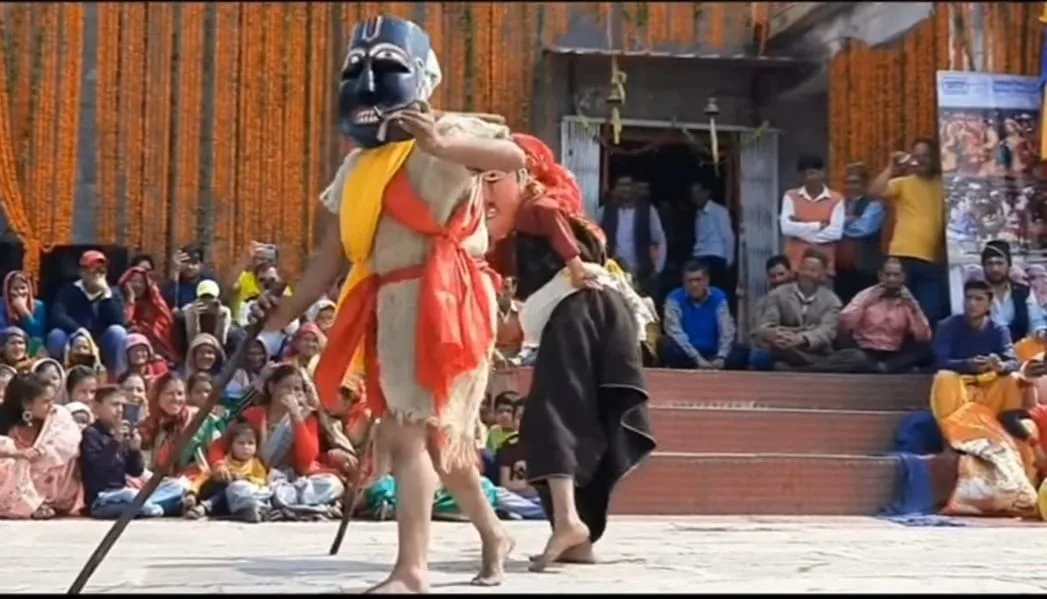
Table of Contents
The Ramman Festival is one of the most unique cultural traditions of Uttarakhand. It is not just a festival. It is a living tradition that still survives in the Himalayan villages with full faith and discipline.
This festival is mainly associated with Saloor Dungra Village, which is also my home village. Along with this, Ramman is also celebrated in nearby villages Dungri Village and Salung Village. These villages are closely connected culturally, and they all follow similar traditions.
Every year, villagers organise this festival to honour their local deity, Bhumiyal Devta. People believe that the deity protects their land, crops, and entire community. I have already explained this in detail in my article on Bhumiyal Devta, where I have covered its role as the guardian deity of Uttarakhand villages. You can read it here!!
Ramman is not a simple celebration. It is a combination of ritual, theatre, music, and dance. Villagers perform stories from the Ramayana, along with many local legends. All roles are fixed and passed down through generations. No outside performers are involved.
Although Ramman is deeply rooted in Saloor Dungra, I have already shared a detailed article about the village itself. If you want to understand the roots of this tradition, you can read it here. Because of its uniqueness and cultural value, Ramman was recognised by UNESCO in 2009 as an Intangible Cultural Heritage.
Even today, Ramman is performed in its original form. It shows how strongly people in our villages are connected with their traditions, beliefs, and identity.
Where is Ramman Festival Celebrated?
The Ramman Festival is mainly celebrated in Saloor Dungra Village, which is located in the Chamoli district of Uttarakhand. This village is not very famous on the tourist map, but culturally it holds a very important place in the Garhwal region.
As I already shared in my detailed article on the village, Saloor Dungra is the root of Ramman tradition. If you want to understand the village deeply, you can read it here.
Location Details
Saloor Dungra is situated in the upper region of Chamoli district. It lies close to some well-known Himalayan destinations.
- Around 10–12 km from Joshimath
- On the route towards Badrinath
- Near the famous ski destination Auli
Because of this location, the village is surrounded by beautiful Himalayan landscapes, dense forests, and traditional farming fields.
Along with Saloor Dungra, Ramman is also celebrated in nearby villages like Dungri Village and Salung Village, which are culturally connected to each other.
Geographic and Cultural Importance
This region is part of the Garhwal Himalayas, which is known for its deep-rooted traditions and spiritual importance. Many ancient routes and pilgrimage paths pass through this area.
The presence of places like Badrinath and Auli makes this region important not only culturally but also spiritually and geographically.
Villages like Saloor Dungra have preserved their traditions because of their location. Life here is still simple. People depend on agriculture, livestock, and strong community systems.
Because of this, festivals like Ramman are still performed in their original form, without any modern changes.
Connectivity and Remoteness
Reaching Saloor Dungra is possible, but it still feels remote compared to cities.
- Well connected by road up to Joshimath
- From Joshimath, local roads lead towards the village
- Final stretch may involve narrow hill roads or short walks
The remoteness of the village is actually one of its strengths. It has helped in preserving culture and traditions for generations.
Even today, when you visit Saloor Dungra, you can feel the real Himalayan village life, far away from crowd and commercial tourism.
Historical Background of Ramman Festival
The history of the Ramman Festival is very deep and interesting. It is not written clearly in books, but it lives strongly in the memories and traditions of local people.
Origin of the Festival
According to local belief, the origin of Ramman is connected with the arrival of Adi Guru Shankaracharya in the Himalayan region.
People say that when Shankaracharya ji travelled across India, he also came to the Garhwal Himalayas. During his visit, he introduced many spiritual and cultural practices. Mask-based performances like Ramman are not originally a North Indian folk style. These types of ritual theatre were more common in other parts of India.
It is believed that Shankaracharya ji helped in introducing and shaping such traditions in this region. Over time, local people adapted it in their own way. They mixed it with their village beliefs, rituals, and lifestyle. This is how Ramman slowly became a unique local tradition.
How Old is This Tradition?
There is no exact written record of when Ramman started. However, based on oral history and practices, it is believed to be several hundred years old.
The most important point is that this tradition has never been broken. It has been performed continuously for generations. Each generation learns from the previous one. No major changes are made in rituals or performances.
This continuity itself shows how ancient and strong this tradition is.
Stories Passed Through Generations
Ramman is not just a performance. It is a collection of stories.
These stories are passed orally:
- From elders to young people
- Through practice, not written text
- Through real participation in rituals
The performances include:
- Stories from the Ramayana
- Local heroes and village legends
- Social and historical events of the region
Because of this, Ramman becomes a living storytelling system. It keeps history alive without books.
Connection with Ancient Himalayan Traditions
Ramman is deeply connected with old Himalayan culture.
In villages like Saloor Dungra Village, traditions are not separate from daily life. Religion, nature, and culture are all connected.
- Worship of local deities like Bhumiyal Devta
- Seasonal rituals related to farming
- Community-based celebrations
All these elements come together in Ramman.
So, Ramman is not just a festival started at one point in time. It is a result of centuries of cultural evolution in the Himalayas.
Religious Significance of Ramman
The religious side of the Ramman Festival is its most important part. For villagers, this is not just a cultural event. It is a deeply spiritual process connected with their daily life and beliefs.
Role of Bhumiyal Devta
At the centre of Ramman is Bhumiyal Devta, who is considered the protector of land and people.
In villages like Saloor Dungra Village, Bhumiyal Devta is not just a deity in temple. He is treated like a living guardian of the village.
If you want to understand this concept deeply, I have already explained it in detail here.
Annual Ritual Cycle of the Deity
The entire Ramman festival is actually the final part of a long religious cycle of Bhumiyal Devta.
Every year, on the evening of Ramman day:
- Bhumiyal Devta, along with his belongings (doli and sacred items), is taken to one selected village family
- The deity stays in that house for the next one year
This shows a very unique tradition where the deity lives among villagers.
Then, before the next Ramman:
- Around 13 days before Baisakhi, the deity is brought back to the Bhumiyal temple
- For these 13 days, special पूजा and rituals take place
During this period:
- The deity visits different parts of the village during daytime
- Blessings are given to people and places
Finally, on the day of Ramman:
- The deity is again taken to another village house
- This marks the completion of the whole religious cycle
So, Ramman is not just one-day event. It is the final and most important day of a year-long spiritual process.
Why Villagers Perform This Ritual
Villagers perform Ramman with full faith and discipline.
They believe:
- The deity protects the village from natural disasters
- Crops grow well with blessings
- Livestock remains safe
- Peace and harmony stay in the community
Because of these beliefs, every ritual is performed very carefully. No step is ignored.
Beliefs Related to Protection and Prosperity
In Himalayan villages, life depends a lot on nature. Weather, land, and water all play an important role.
That is why people strongly believe:
- Devta controls natural balance
- Good rituals bring good results
- Any mistake in rituals can bring problems
This belief system has helped in preserving Ramman in its original form.
Spiritual Importance in Daily Life
In Saloor Dungra, spirituality is not limited to festivals.
- People remember the deity in daily work
- Farming, festivals, and family events are all connected with blessings
- Decisions are often taken with respect to traditions
Because of this, Ramman becomes more than a festival. It becomes a reflection of the spiritual life of the village.
UNESCO Recognition and Global Importance
The Ramman Festival is not only important for our villages, but it has also received global recognition. This recognition came from UNESCO, which works to protect cultural and natural heritage around the world.
Role of UNESCO
UNESCO identifies and supports traditions that are unique and valuable for humanity. These traditions are listed under Intangible Cultural Heritage, which includes festivals, rituals, music, and practices that are not physical monuments but are living traditions.
By recognising such traditions, UNESCO helps:
- Preserve cultural identity
- Promote awareness at global level
- Encourage future generations to continue traditions
Ramman is one such tradition that represents the living culture of the Himalayas.
Year of Recognition (2009)
In 2009, Ramman was officially included in UNESCO’s list of Intangible Cultural Heritage.
This was a big moment not only for Saloor Dungra Village, but also for the entire Uttarakhand. It brought international attention to a small Himalayan village and its unique tradition.
Why Ramman Got This Status
There are several strong reasons why Ramman received this recognition.
- It is a living ritual tradition, not just a staged event
- It combines religion, theatre, music, and social structure
- The entire village participates in an organised way
- Knowledge is passed orally from one generation to another
- Traditions are followed without major changes
Most importantly, Ramman is deeply connected with the village deity Bhumiyal Devta, which makes it both spiritual and cultural.
What Makes Ramman Different from Other Festivals
Ramman stands apart from most festivals in India.
- It is celebrated only in a few villages like Saloor Dungra, Dungri, and Salung
- It is not organised for tourism or entertainment
- There are no professional performers
- Every role is fixed within families
- Rituals are more important than performance
In many places, festivals change with time. But in Ramman, traditions remain almost the same.
Because of this originality and discipline, Ramman is seen as a rare example of how ancient traditions can survive in modern times.
This global recognition has made people more aware about Ramman. At the same time, it has also increased the responsibility to protect and preserve this heritage for future generations.
When is Ramman Festival Celebrated?
The Ramman Festival is celebrated every year in the spring season, mainly during the time of Baisakhi. This period usually falls in the month of April.
Month and Timing (April / Baisakhi Period)
Ramman is closely linked with the festival of Baisakhi, which marks the beginning of the new harvest season in the Himalayan region.
- Celebrated in April (mid-April period)
- Takes place around Baisakhi time
- Weather is pleasant, and village activity is high
This timing is not random. It is connected with agriculture and seasonal changes. Villagers see this period as a fresh beginning, so it is considered ideal for rituals and blessings.
Duration of the Festival
Many people think Ramman is a one-day event. But in reality, it is part of a long ritual process.
- The main Ramman performance happens on one final day
- However, the full ritual cycle continues for many days before that
- Especially the 13-day पूजा period before Ramman is very important
During these days:
- Bhumiyal Devta is worshipped in the temple
- Rituals take place daily
- The deity visits different parts of the village
So, Ramman day is actually the final and most important day of this whole spiritual process.
How Dates are Decided (Hindu Calendar)
The exact date of Ramman changes every year.
This is because:
- It is decided according to the Hindu calendar (Panchang)
- Local priests and elders fix the date based on traditional calculations
- The festival is aligned with Baisakhi but may vary slightly each year
This system has been followed for generations. No modern calendar decides it. The decision always comes from traditional knowledge and religious practice.
Because of this, Ramman stays connected with its original roots and timing.
In simple words, Ramman is not just about one fixed date. It is about a season, a process, and a belief system that continues every year in the same traditional way.
Complete Ritual Process of Ramman Festival
The Ramman Festival follows a very structured and traditional ritual process. It is not random. Every step, every performance, and every entry is fixed and followed strictly.
Ramman is basically a ritual re-enactment of the life of Lord Ram, but in a unique Garhwali style. Unlike normal Ramlila, it is not based on dialogues. Here, the full story is expressed through dance, rhythm, and ballad singing.
Pre-Festival Ritual Setup
Before the main performance, a proper system is prepared.
- Bhaldas (traditional narrators) are invited
- The performance ground is prepared
- Musical instruments like dhol and damau are arranged
- Mask characters and costumes are made ready
The Bhaldas play a very important role. They sing the entire story of Ram in the form of a ballad. Villagers also join them in singing.
Structure of Ramman Performance (Taal System)
The full Ramman performance is divided into 18 “Taals”.
A taal is a rhythm cycle made of:
- Drum beats
- Dance movements
- Ballad narration
A person sits near the performance area and draws lines to count each taal. This helps in maintaining the correct sequence and timing of entries.
Sequence of Taals (Performance Flow)
First to Seventh Taal
- Birth of Ram and his brothers
- Their childhood and education
- Journey to Janakpuri
At this stage, Bhumiyal Devta also appears and dances, showing his presence in the ritual.
Eighth Taal
- Meeting of Ram and Sita
- Marriage (Vivah)
- Return to Ayodhya
- Beginning of exile
Here, a special character called Ardhanga (half man, half woman) enters and interacts with the audience.
Ninth Taal
- Events during exile
- Dance of Ram, Laxman, Sita, and Hanuman
At this point, characters like:
- Mwa:r
- Mwa:rin
enter and present their theatrical acts.
Tenth and Eleventh Taal
- Meeting with Sugreeva
- Further exile events
Characters like:
- Banya-Banyaan
- Khelwari
perform their parts during this stage.
Twelfth to Fourteenth Taal
- Continuous storytelling through dance
- Synchronisation of ballad and performance
The rhythm and energy increase gradually.
Fifteenth Taal
This is one of the most intense parts.
- Dance combat of Maal (warrior characters)
- Performance continues for long duration
Suddenly, a dramatic entry of Kurjogi happens, who attacks in a symbolic way.
Sixteenth Taal
- Continued dance of main characters
- Entry of Purcheli (blessing goddess)
This stage brings a spiritual shift in the performance.
Seventeenth Taal
This part includes two major events:
Sita Haran (Abduction of Sita)
- A deer character enters (man wearing deer mask)
- Sita follows and interacts
- Ravan enters and takes Sita away
Lanka Dahan (Burning of Lanka)
- Hanuman enters
- Symbolic destruction of Lanka using grass structures
This part is highly dramatic and emotional.
Nature of Performance
Unlike modern theatre:
- No dialogues are used
- Dance is the main medium
- Ballad singing continues throughout
- Entry of characters is fixed and timed
This makes Ramman very different from common Ramlila performances.
Cultural Meaning of the Ritual Process
The entire ritual process shows:
- Strong connection with the Ramayana
- Blending of local culture with epic stories
- Presence of unique Himalayan characters and beliefs
Even though the story is of Ram, the setting feels local. It connects Ram’s life with the Himalayan region.
Final Understanding
The ritual process of Ramman is not just storytelling. It is a complete cultural system.
- It combines religion, performance, and community
- It follows a fixed rhythm and sequence
- It preserves ancient knowledge through practice
When we see Ramman, we are not just watching a performance. We are witnessing a tradition that has been alive for centuries in villages like Saloor Dungra Village.
This detailed ritual structure is the main reason why Ramman is considered so special, both locally and globally.
Ramman Mask Dance (Mukhauta Nritya)
The mask dance, locally known as Mukhauta Nritya, is the most attractive and unique part of the Ramman Festival. Without masks, Ramman cannot be imagined.
In villages like Saloor Dungra Village, these masks are not just performance items. They are treated with respect and are considered sacred.
Importance of Mask Dance in Ramman
Mask dance is the main way of expression in Ramman.
- No dialogues are used
- Emotions are shown through dance and body movement
- Each mask represents a specific character
Because of this, the performer does not act as himself. He becomes the character he is representing.
This makes the performance more powerful and spiritual.
Types of Masks Used
There are many types of masks used in Ramman. Each one has its own identity and meaning.
Some common categories include:
- Gods and divine characters
- Demons and negative forces
- Animals (like deer in Sita Haran)
- Local cultural characters
Characters like:
- Mwa:r and Mwa:rin
- Banya-Banyaan
- Khelwari
- Kurjogi
all have their own unique masks and roles in the performance.
How Masks are Made
The masks used in Ramman are traditionally made by hand.
- Usually made from wood
- Painted with bright natural colours
- Designed according to fixed traditional patterns
These masks are not changed frequently. Many masks are used for years and are repaired carefully when needed.
The design and colour combination are very important. They help the audience easily recognise the character.
Symbolism of Masks
Each mask has a deep meaning.
- Big eyes may show power or anger
- Bright colours may represent divine energy
- Animal masks represent specific events from stories
For example:
- Deer mask is used in Sita Haran
- Demon masks show evil forces
- Divine masks represent gods and protectors
So, masks are not just decorative. They carry cultural and spiritual messages.
Sacred Value of Masks
In Ramman, masks are treated as sacred objects.
- They are kept safely when not in use
- Handled with respect
- Used only during proper rituals
People believe that once a performer wears the mask, the character’s spirit enters him. That is why discipline is very important during the performance.
Role in Cultural Preservation
Mask dance plays a big role in keeping Ramman alive.
- It helps in storytelling without words
- It connects new generation with old traditions
- It keeps the visual identity of the festival strong
Even today, when you watch Mukhauta Nritya, you can feel the same energy that people experienced hundreds of years ago.
The Mukhauta Nritya of Ramman is not just a dance form. It is a living cultural expression of the Himalayan villages.
It shows how simple materials like wood and colour can create something so powerful. Through these masks, stories come alive, and traditions continue without break.
Characters and Performances in Ramman
The characters and performances are the soul of the Ramman Festival. Each character has a fixed role, and every performance follows a traditional pattern.
In villages like Saloor Dungra Village, these characters are not just performers. They are part of a living tradition. People recognise them by their masks, costumes, and style of movement.
Main Divine Characters
The central story of Ramman is based on the Ramayana.
Important divine characters include:
- Ram – the main hero
- Laxman – his brother
- Sita – symbol of purity
- Hanuman – symbol of strength and devotion
These characters appear in different stages of the performance and tell the story through dance.
Special Symbolic Characters
Apart from Ramayana characters, Ramman includes some very unique local characters.
Ardhanga
- A half man, half woman character
- Represents dual nature of life
- Interacts with audience during performance
This character brings a different style to the performance.
Traditional Folk Characters
Ramman also includes many local cultural characters. These are very important for the identity of the festival.
Some key characters are:
- Mwa:r and Mwa:rin – perform dramatic and comic acts
- Banya-Banyaan – represent social life
- Khelwari – adds entertainment and rhythm
- Kurjogi – enters suddenly with aggressive style
- Maal (warrior characters) – perform combat dance
These characters break the seriousness of the Ramayana story and connect it with village life.
Animal and Symbolic Characters
Some characters represent animals and natural elements.
- Deer (Mriga) – used in Sita Haran scene
- Other symbolic forms based on story needs
These roles are very important in storytelling.
Performance Style
The performance style of Ramman is very different from modern theatre.
- No spoken dialogues
- Full story shown through dance and rhythm
- Ballad singing continues in background
- Entry and exit of characters are fixed
Each character enters at the right time according to the taal system.
Fixed Roles and Family Connection
One unique thing in Ramman is that roles are not randomly given.
- Each role belongs to a particular family
- It is passed from generation to generation
- Training happens naturally by watching elders
Because of this system, the performance remains consistent every year.
Emotional and Cultural Impact
The combination of different characters creates a powerful experience.
- Divine characters bring devotion
- Folk characters bring connection with daily life
- Dramatic scenes create emotional impact
All together, they make Ramman more than just a performance.
Final Words
The characters of Ramman are not just part of a show. They are part of a living cultural identity.
Each mask, each role, and each movement carries meaning. When these characters come together, they bring stories, beliefs, and traditions alive in front of the audience.
That is why Ramman feels so real and powerful even today.
Music and Instruments Used in Ramman
Music is the backbone of the Ramman Festival. Without music, the whole performance cannot happen. Since Ramman has no dialogues, music and rhythm carry the full story.
In villages like Saloor Dungra Village, music is not just for entertainment. It is a sacred part of the ritual.
Traditional Instruments Used
Ramman uses simple but powerful traditional instruments of the Garhwal region.
Dhol
- Main drum used in the festival
- Provides base rhythm for the entire performance
- Controls the speed and energy of dance
Damau
- Played along with dhol
- Gives depth and variation to rhythm
- Creates a strong traditional sound
The combination of dhol-damau is very famous in Uttarakhand and is considered sacred in many rituals.
Role of Music in Performance
Music in Ramman is not separate from dance. It directly controls it.
- Each taal (rhythm cycle) is defined by drum beats
- Dancers follow the rhythm strictly
- Entry of characters depends on musical timing
If the rhythm changes, the whole performance flow changes. That is why musicians play a very important role.
Role of Bhaldas (Ballad Singers)
One of the most unique parts of Ramman music is the role of Bhaldas.
- They sing the full story of Ram in the form of a ballad
- Their singing continues throughout the performance
- Villagers often join them in chorus
The dance and music move together with this narration.
So, in Ramman:
- Bhaldas = storytelling voice
- Musicians = rhythm creators
- Dancers = visual performers
All three work together as one system.
Rhythm and Cultural Identity
The rhythm used in Ramman is not random. It follows traditional patterns.
- Each taal has fixed beats
- Drum patterns are passed through generations
- No modern music is used
This keeps the cultural identity strong and original.
Sacred Nature of Music
Music in Ramman is considered sacred.
- Instruments are respected
- Played only in proper ritual setting
- Musicians follow discipline and tradition
It is believed that the sound of dhol-damau invites divine presence and creates a spiritual environment.
Role of Local Community in Ramman
The Ramman Festival is completely built on the strength of the local community. Without the villagers, Ramman cannot exist.
In Saloor Dungra Village and nearby villages, people do not see Ramman as an event. They see it as their responsibility and identity. Every family is connected to it in some way.
Family-Based Role System
One of the most unique things in Ramman is that roles are fixed within families.
Each family has its own duty. Some families perform rituals, some handle music, and some take part in masked performances. These roles are not changed. They are passed from one generation to another.
Because of this system, there is no confusion or competition. Everyone knows what they have to do, and they do it with full dedication.
No Professional Performers
Ramman does not involve any outside artists.
All performers are local villagers. They learn by watching their elders from childhood. Slowly, they become part of the tradition.
This makes Ramman very real. It is not a staged show. It is a lived experience of the community.
Strong Sense of Unity
During Ramman, the whole village comes together.
People help each other in preparations, rituals, and performances. Even those who are not directly performing stay involved in different ways.
This creates a strong bond among villagers. It brings a feeling of togetherness and shared responsibility.
Knowledge Transfer to Next Generation
Ramman survives because knowledge is passed naturally.
Children grow up watching the festival every year. They learn:
- How rituals are done
- How music is played
- How characters perform
There is no formal training. Learning happens through participation and observation.
Community as the Keeper of Tradition
The biggest role of the community is to protect the tradition.
Villagers make sure that:
- Rituals are performed correctly
- No unnecessary changes are made
- Cultural values are respected
Because of this, Ramman has remained unchanged for generations.
The local community is the heart of Ramman.
It is their faith, discipline, and unity that keep this tradition alive. In today’s world, where many traditions are fading, Ramman continues because the people are still deeply connected to it.
Cultural Importance of Ramman Festival
The Ramman Festival is not just a festival. It is a strong symbol of the cultural identity of the Garhwal Himalayas.
In villages like Saloor Dungra Village, Ramman reflects how people live, believe, and stay connected with their roots. It shows the real lifestyle of Himalayan communities.
Reflection of Garhwali Culture
Ramman brings together all elements of Garhwali culture in one place.
You can see:
- Traditional music and instruments
- Mask dance and storytelling
- Rituals connected with local deities like Bhumiyal Devta
- Community-based participation
All these things show how rich and unique the culture of this region is.
Preservation of Ancient Traditions
One of the biggest cultural values of Ramman is preservation.
Many traditions in today’s time are changing or disappearing. But Ramman is still performed in the same way as it was done by earlier generations.
There are strict rules:
- No modern changes in rituals
- Fixed roles and performance style
- Respect for traditional methods
Because of this discipline, Ramman acts like a living museum of culture, but in real life.
Identity of Himalayan Villages
For local people, Ramman is not just a festival. It is part of their identity.
People feel proud to be connected with this tradition. It gives them a sense of belonging and continuity.
Even those who move to cities still feel emotionally connected to Ramman and try to return during the festival.
Connection Between Religion and Culture
Ramman beautifully connects religion and culture.
It is dedicated to Bhumiyal Devta, but at the same time, it includes storytelling, music, and social participation.
This combination shows how, in Himalayan life:
- Religion is part of culture
- Culture is part of daily life
Both cannot be separated.
Importance in Modern Time
In today’s fast-changing world, Ramman has become even more important.
- It helps in keeping traditions alive
- It teaches younger generations about their roots
- It shows a sustainable way of preserving culture
Because of its uniqueness, it has also received recognition from UNESCO, which highlights its global importance.
The cultural importance of Ramman goes beyond one village or one festival.
It represents the spirit of the Himalayas, where traditions are still respected and followed. It reminds us that culture is not something we only read about. It is something we live, protect, and pass on.
That is why Ramman is not just important for Uttarakhand, but for the whole world.
Unique Features of Ramman Festival
The Ramman Festival stands out from most festivals in India. Its uniqueness comes from the way it is performed, preserved, and connected with village life.
In Saloor Dungra Village and nearby villages, Ramman is not designed for show. It is followed as a tradition with strict rules and deep belief.
Limited to Specific Villages
One of the most special things about Ramman is its limited presence.
It is mainly celebrated in:
- Saloor Dungra
- Dungri
- Salung
This makes it rare. Unlike other festivals, it is not spread across regions. Its identity stays connected to these villages only.
No Modernisation in Rituals
Ramman has remained almost unchanged for generations.
People do not modify:
- Ritual process
- Dance style
- Music patterns
- Role system
Even today, everything is performed in the same traditional way. This level of preservation is very rare.
Combination of Ritual, Theatre, and Dance
Ramman is not just one type of event.
It is a mix of:
- Religious rituals
- Dance performances
- Storytelling through ballads
This combination creates a complete cultural experience. It connects spiritual belief with artistic expression.
Community-Based System
The entire festival is organised by villagers themselves.
- No external organisers
- No professional performers
- Every family has a role
This makes Ramman a true community festival. It reflects unity and shared responsibility.
Fixed Role Tradition
Roles in Ramman are not flexible.
They are:
- Assigned to specific families
- Passed from generation to generation
- Followed without change
This ensures continuity and keeps the tradition authentic.
Performance Without Dialogue
Another unique feature is its performance style.
- No spoken dialogues
- Full story expressed through dance and music
- Ballad singing guides the narrative
This makes Ramman different from common Ramlila performances.
Deep Spiritual Connection
Ramman is closely linked with Bhumiyal Devta.
The festival is not just cultural. It is part of a year-long religious cycle. This deep spiritual connection gives it more meaning than a normal festival.
The uniqueness of Ramman lies in its simplicity and authenticity.
It has not changed with time. It has stayed connected with its roots. That is why it feels real, powerful, and different.
In today’s world, where many traditions are becoming commercial, Ramman still stands as a pure example of living culture.
Challenges in Preserving Ramman Tradition
The Ramman Festival has survived for centuries. However, in today’s time, it is facing several challenges.
In villages like Saloor Dungra Village, people are trying their best to protect this tradition. Still, changes in lifestyle and society are creating pressure on this cultural system.
Migration from Villages
One of the biggest challenges is migration.
Many young people are moving to cities for:
- Jobs
- Education
- Better facilities
Because of this, fewer people remain in the village to continue traditions. Ramman depends on community participation, so migration directly affects it.
Decline in Traditional Knowledge
Ramman is based on oral tradition.
Knowledge is not written. It is learned by:
- Watching elders
- Participating in rituals
When younger generations stay away from villages, this learning process becomes weak. Slowly, there is a risk of losing detailed knowledge of rituals, music, and performances.
Changing Lifestyle and Priorities
Modern lifestyle is different from village life.
People today:
- Have less time for long rituals
- Prefer modern entertainment
- Are less connected with traditional practices
This change in mindset can affect the continuity of Ramman in the future.
Limited Awareness Beyond the Region
Even though Ramman is recognised by UNESCO, many people still do not know about it.
- Very limited promotion
- Lack of proper documentation
- Not much digital presence
Because of this, the festival does not get the attention it deserves.
Infrastructure and Accessibility Issues
Villages like Saloor Dungra are still remote.
- Limited transport facilities
- Basic infrastructure challenges
- Difficult access during certain seasons
These factors make it hard for outsiders, researchers, and even locals working outside to attend the festival.
Need for Balanced Preservation
Another challenge is how to preserve Ramman without changing its original form.
If too much modernisation is introduced, the tradition may lose its authenticity. At the same time, without awareness and support, it may weaken.
So, a balance is needed:
- Protect traditions
- Create awareness
- Involve younger generation
Ramman has survived because of strong belief and community effort. But now, it needs careful attention.
The responsibility lies not only with villagers but also with people who understand its value. If proper steps are taken, this beautiful tradition can continue for many more generations.
How to Experience Ramman Festival (Travel Guide)
If you really want to experience the Ramman Festival, you need to plan your journey properly. This is not a commercial festival. It happens in a village environment, so you must travel with respect and patience.
How to Reach Saloor Dungra
The festival is celebrated in Saloor Dungra Village, which is located near Joshimath.
First, you need to reach Joshimath.
- From Rishikesh, you can travel by road via Devprayag, Rudraprayag, and Karnaprayag
- Their is a place called Jharkula(6km before Joshimath). From their a 6km branch road will get you to village.
- Regular buses and taxis are available
- The journey is long but very scenic
Because the village is not a major tourist spot, signboards may be limited.
Best Time to Visit
The best time to visit is during the Ramman festival period.
- Usually held in April (around Baisakhi)
- Weather is pleasant
- Village is active with rituals and preparations
If you visit at any other time, you will see normal village life, but not the festival.
Where to Stay
There are no hotels in Saloor Dungra village.
So, you have two options:
- Stay in Joshimath (best option)
- Or arrange a homestay in the village if you have local contact
Joshimath has many hotels and guest houses for different budgets.
Things to Keep in Mind
Ramman is a sacred ritual, not a tourist show. So behaviour is very important.
- Respect local traditions and rituals
- Do not interrupt performances
- Avoid loud behaviour or disturbance
- Ask before taking photos or videos
- Follow instructions given by villagers
Your attitude should be of a learner, not a spectator.
Travel Tips
Plan your trip with some flexibility.
- Roads in hills may take extra time
- Weather can change suddenly
- Mobile network may be limited
Carry basic essentials like:
- Warm clothes
- Cash (ATMs may not be nearby)
- Comfortable shoes
Nearby Places to Explore
Since you are already in the region, you can also visit nearby destinations.
- Auli – famous for skiing and mountain views
- Badrinath – one of the Char Dham temples
- Joshimath local temples and surroundings
This will make your trip more complete.
Experiencing Ramman is not like attending a normal festival. It is about understanding a living tradition.
If you visit with respect and patience, you will not just see a festival. You will feel the culture, belief, and lifestyle of the Himalayan villages.
That is what makes this experience truly special.
Responsible Tourism Tips
Visiting the Ramman Festival is a very special experience. But at the same time, it comes with responsibility.
Since this festival takes place in a traditional village like Saloor Dungra Village, visitors must behave in a respectful and mindful way.
Respect the Sacred Nature of the Festival
Ramman is not a stage show. It is a religious and cultural ritual.
While attending:
- Stay calm and avoid loud behaviour
- Do not disturb performers or rituals
- Follow what local people are doing
Always remember, you are a guest in their cultural space.
Be Careful with Photography and Videos
Many people want to capture the festival, but it should be done properly.
- Always ask before taking close photos
- Avoid flash during performances
- Do not block the view of others
Some rituals may be sensitive, so it is better to observe more and record less.
Support Local Community
Your visit should benefit the village in a positive way.
- Choose local guides if available
- Stay in local homestays when possible
- Buy small local products
This helps in strengthening the local economy and encourages people to continue their traditions.
Avoid Littering and Pollution
The Himalayan environment is very sensitive.
- Do not throw plastic or waste
- Carry your own water bottle
- Use dustbins if available
Keeping the village clean is your responsibility too.
Dress and Behaviour
Simple and respectful dressing is always better in villages.
- Avoid flashy or inappropriate clothing
- Maintain polite behaviour
- Respect elders and local customs
Small things like this create a good impression.
Understand Before You Judge
Village traditions may feel different from city life.
Instead of judging:
- Try to understand the meaning behind rituals
- Ask questions politely
- Observe with interest
This will make your experience richer.
Responsible tourism is very important for places like Saloor Dungra.
If visitors behave properly, traditions like Ramman will stay protected. Otherwise, outside influence can disturb the original system.
So, travel with respect, learn with patience, and leave with good memories. That is the right way to experience the real culture of the Himalayas.
Conclusion
The Ramman Festival is not just a festival. It is a living tradition that shows the true spirit of the Himalayan villages.
In places like Saloor Dungra Village, Ramman is a part of daily life. It connects people with their roots, their deity Bhumiyal Devta, and their ancestors. Every ritual, every dance, and every role carries meaning.
What makes Ramman special is its simplicity and authenticity. It has not changed with time. It is still performed with the same faith and discipline as earlier generations.
At the same time, this tradition is facing challenges like migration and changing lifestyles. So, it becomes very important to understand its value and support its preservation.
If you truly want to experience the real culture of Uttarakhand, Ramman gives you that opportunity. It is not about watching a festival. It is about feeling a tradition that is still alive.
In the end, Ramman teaches us one simple thing. Culture survives when people stay connected to it. And villages like Saloor Dungra are keeping that connection strong even today.
FAQ – Ramman Festival
What is the Ramman Festival?
The Ramman Festival is a traditional ritual festival of Uttarakhand. It is a mix of dance, music, and storytelling based on the Ramayana and local village traditions. It is performed mainly in Saloor Dungra Village and nearby villages.
Where is Ramman Festival celebrated?
Ramman is mainly celebrated in Saloor Dungra village of Chamoli district. It is also performed in nearby villages like Dungri and Salung, which are culturally connected.
When is Ramman Festival held?
Ramman is celebrated every year in April, around the time of Baisakhi. The exact date changes every year as it is decided according to the Hindu calendar
Why is Ramman Festival important?
Ramman is important because it connects religion, culture, and community life. It is dedicated to Bhumiyal Devta, who is believed to protect the village and its people.
Why is Ramman recognised by UNESCO?
Ramman was recognised by UNESCO in 2009 as an Intangible Cultural Heritage. It got this status because it is a rare living tradition that has been preserved without major changes.
What makes Ramman different from Ramlila?
Ramman is different because:
It has no dialogues
Story is shown through dance and music
It includes local characters and traditions
It is performed only in specific villages
Can tourists attend Ramman Festival?
Yes, tourists can attend Ramman. However, it is important to respect local traditions because it is a sacred ritual, not a tourist show.
How long does Ramman Festival last?
The main performance happens on one day. But the full ritual process continues for many days before that, especially the 13-day worship period of Bhumiyal Devta.
What is the role of masks in Ramman?
Masks (Mukhauta) are very important in Ramman. Each mask represents a character. Performers express emotions through dance while wearing these masks.
How are roles decided in Ramman?
Roles are fixed within families. They are passed from generation to generation. No outside performers take part in the festival.
Is Ramman Festival celebrated anywhere else in India?
No, Ramman is mainly limited to a few villages in Chamoli region. This makes it a rare and unique cultural tradition.
– By Mohit Bangari
Related Post

Explore the beauty and cultures of the Himalayas, from Jammu and Kashmir to Arunachal Pradesh, Tibet and Nepal. My blog shares stories, pictures, and fun articles about this amazing region. Come along on a journey where each mountain has a tale and every valley hides a treasure. Join me as I discover the magic of the mountains together.
Welcome to my Himalayan Adventure!