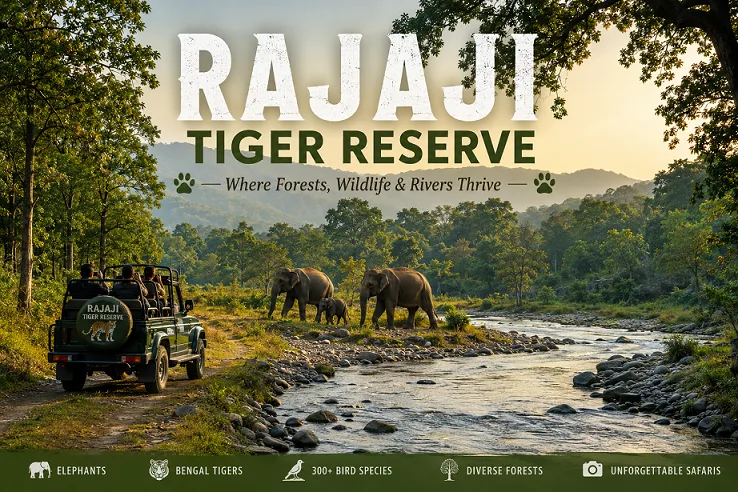
If there is one place in Uttarakhand where nature still rules, it is Rajaji Tiger Reserve. Spread across the beautiful Shivalik hills, this vast forest is home to majestic elephants, elusive Bengal tigers, leopards, hundreds of bird species and countless other wild animals. Every year, thousands of nature lovers, wildlife photographers and adventure seekers visit Rajaji to experience its rich biodiversity. While many tourists come here for a jeep safari, Rajaji offers much more than wildlife sightings. It tells the story of the Himalayan foothills, the Ganga River, ancient forests and the continuous efforts being made to protect one of India’s most important ecosystems.
Located close to Dehradun, Haridwar and Rishikesh, Rajaji Tiger Reserve is one of the easiest tiger reserves to reach in North India. Yet, despite being so close to busy cities, it has managed to preserve large stretches of untouched forests where wildlife still moves freely. The reserve is especially famous for its healthy population of Asian elephants. In fact, many wildlife experts consider Rajaji one of the finest places in India to observe elephants in their natural habitat.
The history of Rajaji Tiger Reserve is equally interesting. Before becoming a tiger reserve, this landscape was protected as three different wildlife sanctuaries – Rajaji Wildlife Sanctuary, Motichur Wildlife Sanctuary and Chilla Wildlife Sanctuary. In 1983, these sanctuaries were merged to create Rajaji National Park. The park was named after Chakravarti Rajagopalachari, popularly known as Rajaji, who was India’s last Governor-General and a strong supporter of wildlife conservation. Later, in 2015, the Government of India declared the park a Tiger Reserve under Project Tiger. This gave the area stronger protection and increased efforts to conserve its wildlife and forests.
Today, Rajaji Tiger Reserve covers more than 820 square kilometres across the districts of Dehradun, Haridwar and Pauri Garhwal. The reserve lies in the Shivalik range, which forms the outer foothills of the Himalayas. The landscape changes constantly as you travel through the reserve. Dense Sal forests suddenly open into wide grasslands. Seasonal streams cut through rocky valleys. Dry deciduous forests merge into riverine forests near the Ganga and Song rivers. This diversity of habitats supports an incredible variety of plants and animals.
One of the biggest reasons behind Rajaji’s importance is its elephant population. The reserve forms part of the famous Terai Arc Landscape, a vast conservation region stretching across northern India and Nepal. Thousands of elephants use this landscape to move between different forest areas. Rajaji also connects with Corbett Tiger Reserve through important wildlife corridors. These corridors allow elephants, tigers and other animals to move safely between forests, helping maintain healthy populations and genetic diversity. Without these natural pathways, wildlife populations would become isolated and face greater risks.
The forests of Rajaji are dominated by towering Sal trees, which create a green canopy during most of the year. Along with Sal, visitors can also find Sheesham, Khair, Haldu, Jamun, Bahera, Amla and many medicinal plants. During spring, several flowering trees add beautiful colours to the forest. The monsoon transforms the reserve into a lush green paradise, while winter offers pleasant weather and better wildlife sightings.
Wildlife enthusiasts often dream of spotting the Bengal tiger inside Rajaji Tiger Reserve. Although tiger sightings are never guaranteed, the reserve has a healthy tiger population that continues to grow because of improved conservation measures. Leopards are also found throughout the reserve, although they are even more secretive than tigers. Apart from these large predators, Rajaji shelters sloth bears, Himalayan goral, sambar deer, barking deer, chital, nilgai, wild boar, langurs, rhesus macaques, jackals, jungle cats, porcupines and many smaller mammals.
For many visitors, however, the true stars of Rajaji are its elephants. Watching a herd slowly crossing a forest road or moving silently through the Sal trees is an unforgettable experience. Female elephants travel together with calves while adult males often move alone. During summer, elephants are frequently seen near water sources where they drink, bathe and cool themselves. These gentle giants play a vital role in maintaining the forest ecosystem by dispersing seeds and creating natural pathways through dense vegetation.
Birdwatchers also consider Rajaji a paradise. More than 300 species of birds have been recorded here. The reserve attracts both resident and migratory birds throughout the year. Great Hornbills fly over the forest canopy with their distinctive wingbeats. Crested Serpent Eagles circle high above the valleys looking for prey. Kingfishers, barbets, woodpeckers, drongos, paradise flycatchers, Himalayan bulbuls, Indian pittas and numerous owls can also be spotted by patient observers. During winter, several migratory birds arrive from colder regions, making the reserve even more attractive for bird photography.
The reserve is divided into different forest ranges, each offering a unique safari experience. Chilla Range is the most popular among tourists because it is easily accessible from Haridwar and Rishikesh. This range is famous for elephant sightings, beautiful Sal forests and the scenic surroundings of the Ganga River. Motichur Range contains dense forests and forms an important wildlife movement area. Mohand Range, located near Dehradun, attracts wildlife photographers looking for quieter forest routes. Ranipur Range receives fewer visitors but offers peaceful birdwatching opportunities. Nearby, the Jhilmil Jheel Conservation Reserve is known for its wetlands and the endangered swamp deer.
A jeep safari remains the best way to explore Rajaji Tiger Reserve. Early morning safaris usually provide the highest chances of wildlife sightings because animals remain active during the cooler hours. Evening safaris offer beautiful golden light that is perfect for photography. Visitors often encounter deer, wild boar, langurs and numerous birds even if larger animals remain hidden. Every safari is different because the forest changes every day.
The best time to visit Rajaji Tiger Reserve is from November to June. Winter offers pleasant temperatures and excellent birdwatching opportunities. During summer, wildlife becomes easier to observe as animals gather near water sources. The reserve generally remains closed during the monsoon because heavy rainfall damages forest roads and many seasonal streams overflow.
Why Tree Felling Near Rajaji Has Become a Major Concern
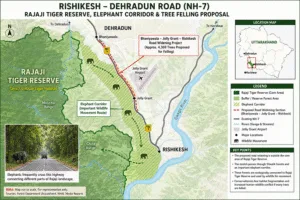
In recent months, Rajaji Tiger Reserve has been at the centre of a major environmental debate due to the proposed widening of the Rishikesh–Dehradun highway. The project involves the felling of thousands of trees along the Bhaniyawala–Jolly Grant–Rishikesh stretch. Although the road lies outside the notified core area of Rajaji Tiger Reserve, it passes through Shivalik forests that are closely connected to the reserve and form an important elephant corridor. Conservationists fear that large-scale tree felling could fragment wildlife habitat, affect elephant movement and increase human–wildlife conflict. The proposal has sparked widespread protests across Uttarakhand, with many environmental groups observing “Black Harela” to highlight the importance of protecting forests. Following public concern, the state government temporarily paused the tree felling and announced discussions with stakeholders. The debate has once again highlighted the challenge of balancing infrastructure development with the long-term conservation of Uttarakhand’s forests and wildlife.
Rajaji is much more than a tourist destination. It performs an essential ecological role for northern India. The forests protect important watersheds that feed rivers flowing into the Ganga basin. The trees help maintain groundwater levels, reduce soil erosion and regulate the local climate. These forests also store large amounts of carbon, making them valuable in the fight against climate change. Protecting Rajaji therefore benefits not only wildlife but also millions of people living in nearby towns and villages.
In recent years, Rajaji Tiger Reserve has also become part of a major environmental debate. The proposed widening of the Rishikesh–Dehradun highway near Bhaniyawala and Jolly Grant has raised concerns among conservationists because thousands of trees may be removed from forests connected to the Rajaji landscape. Although much of the proposed road widening is outside the notified core area of the tiger reserve, it passes through ecologically important Shivalik forests and an active elephant corridor. Wildlife experts believe that careful planning, wildlife crossings and habitat protection are essential to ensure that development and conservation move together. This issue has highlighted the importance of protecting not only the core tiger reserve but also the surrounding forests that support wildlife movement.
Visitors planning a trip to Rajaji should remember that wildlife deserves respect. Animals should never be disturbed for photographs. Loud music, plastic waste and feeding wild animals harm the fragile ecosystem. Responsible tourism helps ensure that future generations can enjoy the same natural beauty that exists today.
If you are already visiting Haridwar, Rishikesh or Dehradun, spending a day inside Rajaji Tiger Reserve can completely change your understanding of Uttarakhand. Beyond its famous temples, yoga centres and hill stations lies a living forest where elephants still follow ancient migration routes, tigers silently patrol dense jungles and countless birds fill the air with their calls. Rajaji reminds us that the Himalayan foothills are not just beautiful landscapes but thriving ecosystems that deserve our protection.
For travellers, Rajaji Tiger Reserve offers adventure, photography and peaceful moments in nature. For scientists, it remains one of India’s most valuable wildlife landscapes. For Uttarakhand, it is a symbol of natural heritage. And for every visitor who enters its forests with patience and respect, Rajaji leaves behind memories of a wild India that continues to survive despite the pressures of the modern world.
By Mohit Bangari
(18 July 2026)