
Monsoon vs Pre-Monsoon Rain in Uttarakhand: What Travellers Need to Know
– By Mohit Bangari
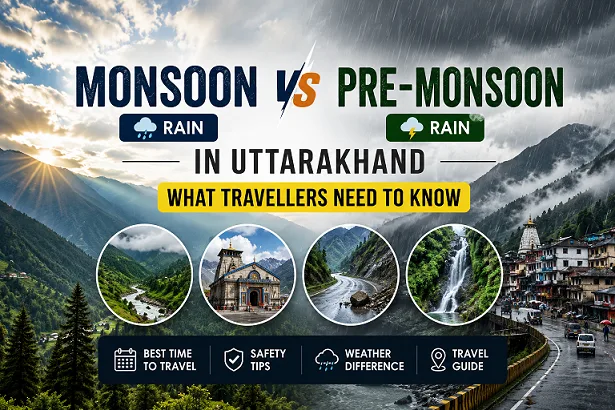
Every year, as soon as the first rains arrive in Uttarakhand, many people assume that the monsoon has reached the state. Social media also gets filled with posts saying, “Monsoon has arrived in the mountains.” However, in many cases, what people see is actually pre-monsoon rain, not the monsoon itself.
For travellers, pilgrims, trekkers and road trip lovers, understanding the difference between these two weather phases is important. It helps in planning a safer and more enjoyable journey.
What is Pre-Monsoon Rain?
Pre-monsoon rain is the rainfall that occurs before the official arrival of the southwest monsoon. In Uttarakhand, it usually appears during May and June.
These showers are often caused by local weather systems, rising temperatures, moisture from nearby regions and western disturbances. The rain usually comes in short spells and is often accompanied by thunder, lightning, gusty winds and sometimes even hailstorms.
The Himalayas of Uttarakhand call trekkers from across the world. But the question always comes – what is the best time to trek in Uttarakhand? The answer depends on seasons, weather, type of trek, and your personal interest. Each season here gives a different beauty, from flower valleys to snow peaks. Click here to read a full article on Best Time to Trek in Uttarakhand.
If you have travelled in the hills during May or early June, you may have noticed clear mornings followed by dark clouds and rain in the afternoon. This is a typical pre-monsoon pattern.
What is Monsoon Rain?
Monsoon rain begins after the southwest monsoon officially reaches Uttarakhand. It generally arrives during the second half of June, although the exact date changes every year.
Unlike pre-monsoon showers, monsoon rainfall is more widespread and continuous. Cloud cover remains for longer periods. Humidity increases significantly, and rain can occur across multiple districts at the same time.
During the monsoon season, rivers, streams and waterfalls become much more active. At the same time, the risk of landslides, road blockages and flash floods also increases.
Pre-Monsoon vs Monsoon Rain: Key Difference
The easiest way to understand the difference is through weather behaviour.
Pre-monsoon rain is usually localised and short-lived. A village may receive heavy rain while another nearby area remains dry. In contrast, monsoon rain affects larger regions and can continue for several days.
Thunderstorms and lightning are more common during the pre-monsoon period. During the monsoon season, prolonged rainfall becomes the dominant feature.
What Does It Mean for Travellers?
For many travellers, the pre-monsoon period is actually one of the best times to visit Uttarakhand.
The weather becomes cooler, dust settles down and the mountains look fresh after occasional rainfall. Roads are generally in better condition compared to the peak monsoon season.
However, travellers should remain cautious of sudden thunderstorms and lightning, especially in open areas and high-altitude regions.
During the monsoon season, extra planning becomes necessary. Landslides and road closures can affect travel routes, particularly on Char Dham roads and mountain highways.
Impact on Trekkers and Pilgrims
If you are planning to visit Kedarnath, Badrinath, Hemkund Sahib or Valley of Flowers, keeping track of weather updates is essential.
Trekkers heading towards places such as Kuari Pass, Har Ki Dun or other Himalayan trails should also check forecasts regularly. Wet trails can become slippery, and river crossings may become difficult after heavy rainfall.
If you are interested in these destinations, you can also read our detailed guides on Kedarnath, Madmaheshwar and the Chopta Tungnath Trek.
Where Can You Get Reliable Weather Information?
Many people depend only on social media posts. However, weather information should always be verified from official sources.
The most reliable source is the Indian Meteorological Department (IMD). Travellers can also check the Meteorological Centre Dehradun for district-wise weather forecasts.
Useful resources include:
- IMD: https://mausam.imd.gov.in/
- Meteorological Centre Dehradun: https://mausam.imd.gov.in/dehradun/
- Uttarakhand Disaster Management Authority: https://usdma.uk.gov.in/
- Traffic and Road Updates: https://trafficeye.ukpolice.gov.in/
Final Thoughts
Not every rainstorm in Uttarakhand means that the monsoon has arrived. In many cases, especially during May and early June, the state experiences pre-monsoon activity.
For travellers, understanding this difference can help avoid confusion and improve trip planning. Pre-monsoon showers often bring pleasant weather and beautiful mountain views, while the monsoon season offers lush green landscapes but also comes with additional travel risks.
Before starting any trip to the Himalayas, always check official weather updates and local advisories. A little preparation can make your journey safer and more enjoyable.
By Mohit Bangari
(17Jun 2026)
Related Post





Explore the beauty and cultures of the Himalayas, from Jammu and Kashmir to Arunachal Pradesh, Tibet and Nepal. My blog shares stories, pictures, and fun articles about this amazing region. Come along on a journey where each mountain has a tale and every valley hides a treasure. Join me as I discover the magic of the mountains together.
Welcome to my Himalayan Adventure!