
From Usha's Love Story to Kedarnath's Winter Home: The Story of Ukhimath
– By Mohit Bangari
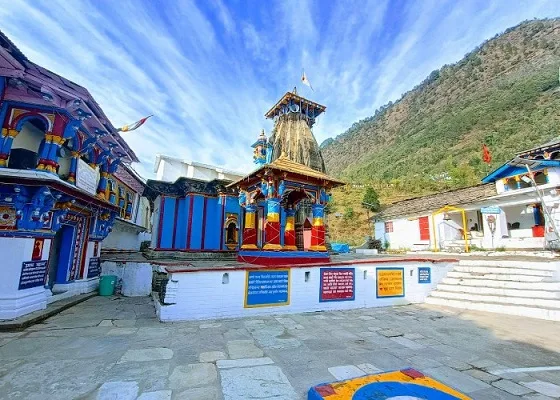
Among the many sacred towns of Uttarakhand, Ukhimath holds a very special place in the religious geography of the Himalayas. Thousands of pilgrims visit Kedarnath every year, while many devotees undertake the difficult trek to Madmaheshwar. However, very few people know that during winter, when both these high-altitude temples remain covered under deep snow, their worship continues at a small Himalayan town known as Ukhimath.
Located in the Rudraprayag district of Uttarakhand, Ukhimath serves as the winter seat of Lord Kedarnath and Lord Madmaheshwar. Every year, after the closing of the temple gates in late autumn, the ceremonial idols of these revered shrines are brought to the ancient Omkareshwar Temple in Ukhimath. For the next six months, all religious rituals and daily worship are performed here.
Yet, Ukhimath is much more than a winter home of Kedarnath. The town is deeply connected with Hindu mythology, particularly the famous story of Usha and Aniruddha. Many scholars and local traditions believe that the name “Ukhimath” evolved from “Usha Math,” the place associated with Princess Usha, daughter of the mighty King Banasura.
Surrounded by snow-covered Himalayan peaks, terraced fields, traditional villages, and ancient temples, Ukhimath offers a rare combination of spirituality, mythology, history, and natural beauty. Unlike many crowded pilgrimage destinations, the town still retains its traditional Garhwali character. Visitors can witness local customs, temple traditions, and Himalayan village life from close quarters.
The importance of Ukhimath becomes even more evident when one studies the Panch Kedar tradition. While Kedarnath receives most of the attention, the religious network surrounding the Panch Kedar shrines depends heavily on Ukhimath and the Omkareshwar Temple. For centuries, priests, pilgrims, and local communities have preserved these traditions and ensured the continuity of worship even during the harsh Himalayan winters.
Today, Ukhimath attracts different types of visitors. Pilgrims come to seek blessings from Lord Kedarnath and Lord Madmaheshwar during winter. Nature lovers visit for panoramic views of Chaukhamba, Kedarnath, Neelkanth, and other Himalayan peaks. Trekkers often use the town as a gateway to Chopta, Tungnath, Deoria Tal, and many lesser-known Himalayan trails.
In this article, we will explore the history of Ukhimath, the fascinating story of Usha and Aniruddha, the significance of Omkareshwar Temple, its role in the Kedarnath and Madmaheshwar traditions, nearby attractions, travel information, and many lesser-known facts that make this Himalayan town one of the most important spiritual centres of Uttarakhand.
The next section should be “Where is Ukhimath Located?”, where we can discuss geography, altitude, surrounding valleys, mountain views, and its strategic position in the Kedarnath region in much greater detail.
History of Ukhimath
The history of Ukhimath is a fascinating blend of mythology, faith, and living tradition. Unlike many modern towns that grew around trade routes or administrative centres, Ukhimath developed as a place of religious significance. Its identity has been shaped by ancient legends, temple traditions, and its connection with some of the most important pilgrimage sites in the Himalayas.
Today, most people know Ukhimath as the winter home of Kedarnath and Madmaheshwar. However, the town’s story began long before the establishment of these traditions. Local beliefs and Hindu scriptures connect this region with the famous tale of Princess Usha and Prince Aniruddha, a story that links Ukhimath directly to Lord Krishna and the ancient kingdom of Banasura.
From Usha Math to Ukhimath
According to local tradition, the original name of Ukhimath was Usha Math.
The word Math refers to a religious centre or spiritual seat, while Usha was the daughter of the powerful demon king Banasura. Over centuries, the pronunciation of “Usha Math” gradually changed in local dialects. Many people believe that this transformation eventually gave rise to the present-day name “Ukhimath.”
Even today, the story of Usha and Aniruddha remains deeply rooted in the local culture. Elderly villagers, temple priests, and local historians continue to narrate this legend to pilgrims and visitors.
While it is difficult to verify the historical accuracy of these events, the tradition has survived for centuries and forms an important part of the region’s cultural identity.
Ancient Religious Importance
Long before roads reached the Garhwal Himalaya, pilgrims travelled through difficult mountain trails to visit sacred shrines. The region around Ukhimath was already considered holy because of its association with Lord Shiva and various local deities.
The entire Mandakini Valley has been a centre of Shaivite worship for centuries. Ancient sages are believed to have meditated in these mountains, while several old temples were established along important pilgrimage routes.
As pilgrimage to Kedarnath expanded over time, nearby settlements such as Ukhimath gained greater religious importance. Priests, pilgrims, traders, and local communities helped transform the town into a significant spiritual centre.
Connection with Kedarnath Tradition
The importance of Ukhimath increased further with the development of the Kedarnath pilgrimage tradition.
For centuries, devotees faced a major challenge. Heavy snowfall made Kedarnath inaccessible for nearly half the year. The temple would remain buried under snow, making regular worship impossible.
To ensure that daily rituals continued throughout the year, a tradition evolved in which the movable idol and symbolic presence of Lord Kedarnath were brought to Omkareshwar Temple in Ukhimath during winter.
This arrangement was practical, but it also carried deep religious significance. Devotees believed that while the main shrine remained closed in the high Himalayas, Lord Kedarnath himself resided in Ukhimath during the winter months.
As this tradition became firmly established, Ukhimath emerged as one of the most important religious centres in Uttarakhand.
Association with Madmaheshwar
The spiritual importance of Ukhimath expanded even further when it became the winter seat of Madmaheshwar, one of the sacred Panch Kedar temples.
Like Kedarnath, Madmaheshwar is located at a high altitude and receives heavy snowfall during winter. Therefore, the deity is ceremonially brought to Omkareshwar Temple after the closing of the shrine.
For nearly six months every year, devotees can offer prayers to both Kedarnath and Madmaheshwar at Ukhimath. This unique role makes the town exceptionally important within the Panch Kedar tradition.
Very few places in India serve as the winter abode of two major Himalayan temples simultaneously.
A Centre of Garhwali Religious Culture
Over the centuries, Ukhimath developed into more than just a pilgrimage stop.
The town became a centre for local religious practices, temple festivals, traditional music, folk rituals, and cultural gatherings. Many surrounding villages maintained close connections with Omkareshwar Temple and participated in important ceremonies throughout the year.
Even today, religious processions, traditional drum performances, and local festivals continue to play an important role in community life.
The temple priests, local residents, and visiting pilgrims together help preserve customs that have been passed down through generations.
Ukhimath in Modern Times
In recent decades, improved road connectivity has made Ukhimath more accessible than ever before. Pilgrims travelling to Kedarnath, tourists visiting Chopta, and trekkers heading towards Madmaheshwar often pass through the town.
Despite these changes, Ukhimath has managed to retain much of its traditional character. Unlike many commercial hill stations, the town still reflects the atmosphere of a traditional Himalayan pilgrimage centre.
The ancient temple traditions remain active. Seasonal movements of the deities continue exactly as they have for generations. Local people still participate enthusiastically in religious ceremonies, maintaining a direct link between the present and the past.
This continuity is perhaps the most remarkable aspect of Ukhimath’s history. While the world around it has changed, the town continues to preserve traditions that connect modern pilgrims with centuries of Himalayan faith and devotion.
A Living Heritage
The history of Ukhimath is not confined to books or legends. It can still be seen in the daily life of the town. It lives in the bells of Omkareshwar Temple, in the winter arrival of Kedarnath and Madmaheshwar, in the stories told by local elders, and in the devotion of countless pilgrims who visit every year.
For this reason, Ukhimath is not merely a historical town. It is a living heritage site where mythology, history, culture, and faith continue to exist side by side.
The Story of Usha and Aniruddha
Among the many legends associated with Ukhimath, the story of Usha and Aniruddha is perhaps the most famous. This tale comes from ancient Hindu texts, including the Bhagavata Purana, and has been preserved in local traditions of the Garhwal Himalaya for centuries. According to popular belief, it is this story that gave Ukhimath its original identity as Usha Math, the place associated with Princess Usha.
Even today, many local people consider this legend an important part of the town’s cultural and religious heritage.
Who Was Usha?
Usha was the daughter of King Banasura, a powerful ruler and a devoted follower of Lord Shiva.
According to Hindu mythology, Banasura was the son of the great devotee Mahabali and ruled over a prosperous kingdom known as Sonitpur. Different traditions place Sonitpur in different regions of the Indian subcontinent. In local Garhwali folklore, however, some people associate parts of Banasura’s kingdom with the Himalayan region.
Banasura was known for his immense strength and his unwavering devotion to Lord Shiva. Pleased by his devotion, Shiva blessed him with extraordinary powers and protection.
Despite his strength and influence, Banasura was extremely protective of his daughter Usha.
Usha’s Mysterious Dream
One night, Usha had a strange and beautiful dream.
In her dream, she saw a handsome young prince and instantly fell in love with him. When she woke up, she could not forget his face. She became restless and spent her days thinking about the mysterious young man she had seen.
However, there was one problem.
She did not know who he was.
She had never met him before, nor did she know his name or where he lived.
As days passed, her longing grew stronger.
The Role of Chitralekha
Usha’s closest friend was Chitralekha, a talented artist and the daughter of Banasura’s minister.
Seeing Usha’s sadness, Chitralekha decided to help.
She began drawing portraits of kings, princes, and noblemen from different kingdoms. One by one, she showed these drawings to Usha, hoping to identify the man from her dream.
Usha rejected many portraits.
Then Chitralekha drew the image of Aniruddha.
The moment Usha saw the portrait, she recognised him immediately. He was the same prince who had appeared in her dream.
Who Was Aniruddha?
Aniruddha was no ordinary prince.
He was the grandson of Lord Krishna and the son of Pradyumna. As a member of the Yadava dynasty, he belonged to one of the most respected royal families of ancient India.
According to the legend, Aniruddha lived in Dwarka, far from Banasura’s kingdom.
When Chitralekha discovered his identity, she decided to reunite the two lovers.
Chitralekha’s Extraordinary Journey
The story now takes a magical turn.
Using her mystical powers, Chitralekha travelled to Dwarka. There she found Aniruddha and brought him to Usha’s palace while he was asleep.
When Aniruddha awoke, he found himself in an unfamiliar place. Soon he met Usha, and according to the legend, the two fell deeply in love.
For some time, they remained together in secret within the palace.
However, such a secret could not remain hidden forever.
Banasura Discovers the Truth
Eventually, King Banasura learned that a young prince was secretly living in his palace.
Enraged by this discovery, he ordered his soldiers to capture Aniruddha.
Although Aniruddha fought bravely, he was eventually overpowered and imprisoned.
The news of his captivity eventually reached Dwarka.
When Lord Krishna learned that his grandson had been imprisoned by Banasura, he prepared for war.
The Great Battle
What followed was one of the most dramatic battles described in Hindu mythology.
Lord Krishna, accompanied by his army, marched against Banasura to free Aniruddha.
Since Banasura was a devoted follower of Lord Shiva, the conflict led to a legendary confrontation involving both Krishna and Shiva. Different versions of the story describe various divine weapons, celestial beings, and heroic battles.
After a fierce struggle, Krishna defeated Banasura.
However, because of Banasura’s devotion to Lord Shiva, his life was spared.
Aniruddha was freed, and peace was restored.
The Marriage of Usha and Aniruddha
Following the end of the conflict, Usha and Aniruddha were married with the blessings of both families.
Their union symbolised the triumph of love, destiny, and reconciliation.
According to local traditions in Uttarakhand, the marriage is believed to have taken place in the region now known as Ukhimath. This belief is one of the main reasons why the town has long been associated with Usha and why many people believe its ancient name was Usha Math.
Although historians cannot conclusively verify this connection, the tradition remains deeply respected among local communities.
The Legend in Local Culture
The story of Usha and Aniruddha is not merely a mythological tale for the people of Ukhimath.
For generations, it has formed part of the region’s cultural memory. Temple priests, local historians, and village elders continue to narrate the story to pilgrims and visitors.
The legend has helped shape the identity of the town and remains one of the strongest links between local tradition and broader Hindu mythology.
Many travellers who visit Ukhimath for Kedarnath or Chopta are surprised to learn that the town is connected not only with Lord Shiva but also with one of the most romantic stories found in Hindu literature.
Mythology and Faith Meet in Ukhimath
Whether viewed as history, mythology, or sacred tradition, the story of Usha and Aniruddha adds a unique dimension to Ukhimath’s identity.
Most Himalayan pilgrimage towns are associated primarily with temples and saints. Ukhimath, however, carries an additional legacy—a tale of dreams, friendship, devotion, war, and love that has survived through centuries of oral tradition.
It is this combination of mythology, faith, and living culture that makes Ukhimath one of the most fascinating religious destinations in the Garhwal Himalaya.
Omkareshwar Temple: History and Religious Significance
At the centre of Ukhimath stands the ancient Omkareshwar Temple, the spiritual heart of the town and one of the most important temples in the Garhwal Himalaya. Every visitor who comes to Ukhimath eventually finds their way to this sacred shrine. While many pilgrims know it as the winter seat of Kedarnath and Madmaheshwar, its importance goes much deeper than that.
For centuries, Omkareshwar Temple has served as a place of worship, a centre of religious traditions, and a guardian of some of the most important customs associated with the Himalayan temples of Uttarakhand.
The temple remains active throughout the year. However, its significance reaches its peak during winter when the sacred traditions of Kedarnath and Madmaheshwar shift from the snow-covered mountains to Ukhimath.
The Presiding Deity of the Temple
The main deity of Omkareshwar Temple is Lord Shiva.
Devotees worship Shiva here in the form of Omkareshwar Mahadev. The name “Omkareshwar” is derived from the sacred syllable “Om,” which is considered the primordial sound of the universe in Hindu philosophy.
In Hindu tradition, “Om” represents creation, preservation, and destruction—the three cosmic functions associated with Brahma, Vishnu, and Mahesh (Shiva). Because of this symbolism, the name Omkareshwar carries profound spiritual significance.
Local devotees believe that worshipping Lord Shiva at Omkareshwar Temple brings peace, protection, and spiritual growth.
An Ancient Temple of the Mandakini Valley
The exact date of the temple’s construction remains uncertain. Like many ancient Himalayan shrines, its history is preserved more through tradition than written records.
Local traditions suggest that the temple has existed for many centuries. Some historians believe that the present structure may have undergone several phases of renovation and reconstruction over time. This is common among Himalayan temples, which often face earthquakes, harsh weather, and natural wear.
Despite these changes, the temple has maintained its religious importance continuously.
The spiritual traditions associated with Omkareshwar Temple are undoubtedly ancient and have been preserved by generations of priests and local communities.
A Temple Connected with Kedarnath
The greatest religious significance of Omkareshwar Temple comes from its close association with Kedarnath.
Every year, when winter approaches and snowfall begins in the higher Himalayas, the doors of Kedarnath Temple are ceremonially closed. Before the closure, a special religious process known as the Doli Yatra takes place.
The symbolic representation and movable idol of Lord Kedarnath are then brought from Kedarnath to Ukhimath through a traditional procession.
After arriving at Omkareshwar Temple, the deity is installed according to ancient rituals.
For the next six months, all daily worship and religious ceremonies of Kedarnath are performed here.
This tradition has continued for generations and remains one of the most important religious events in Uttarakhand.
Winter Home of Madmaheshwar
Omkareshwar Temple also serves as the winter seat of Madmaheshwar, one of the sacred Panch Kedar temples.
Madmaheshwar lies at a much higher altitude and becomes inaccessible during winter due to heavy snowfall. As a result, the deity of Madmaheshwar is also brought to Ukhimath after the annual closure of the temple.
This unique arrangement means that during winter, devotees can seek blessings associated with both Kedarnath and Madmaheshwar at the same location.
Very few temples in India hold such an important position within two major pilgrimage traditions simultaneously.
A Living Centre of Himalayan Worship
Unlike many ancient temples that function mainly as historical monuments, Omkareshwar Temple remains a living centre of worship.
Every day, priests perform traditional rituals, offer prayers, and conduct ceremonies according to established customs. Local residents visit regularly, while pilgrims arrive throughout the year to seek blessings.
The atmosphere inside the temple reflects the simplicity and devotion often found in Himalayan shrines. Rather than grand architecture or elaborate decorations, visitors experience a deep sense of spiritual calm.
The sound of bells, the fragrance of incense, the chanting of mantras, and the presence of centuries-old traditions create an environment that feels both sacred and timeless.
Religious Importance in the Panch Kedar Tradition
The Panch Kedar temples hold a special place in the religious landscape of Uttarakhand. These five temples—Kedarnath, Madmaheshwar, Tungnath, Rudranath, and Kalpeshwar—are associated with Lord Shiva and the Mahabharata tradition.
Among these, Kedarnath is the most famous. However, Omkareshwar Temple plays a crucial role in preserving the continuity of worship associated with Kedarnath and Madmaheshwar.
Without Ukhimath and Omkareshwar Temple, the centuries-old practice of year-round worship would be difficult to maintain.
Because of this responsibility, the temple occupies a unique position within the Panch Kedar network.
A Spiritual Link Between Mountains and Plains
One of the most remarkable aspects of Omkareshwar Temple is its role as a bridge between the high Himalayas and the lower valleys.
During summer, devotees travel to the lofty shrines of Kedarnath and Madmaheshwar. During winter, those same traditions descend to Ukhimath.
This seasonal movement of the deities symbolises the deep relationship between the mountains, local communities, and pilgrimage traditions.
It also demonstrates how Himalayan religious practices have adapted to the challenges of geography and climate while preserving their spiritual essence.
More Than a Winter Seat
Many visitors initially come to Omkareshwar Temple because of its connection with Kedarnath. However, they often discover that the temple possesses its own distinct identity.
Its association with Lord Shiva, its ancient traditions, its connection with the legend of Usha and Aniruddha, and its central role in Garhwali religious culture make it much more than a temporary winter residence for sacred deities.
For local people, it is one of the most revered temples in the region. For pilgrims, it is a place where they can remain connected to Kedarnath and Madmaheshwar even when those shrines are closed. For travellers, it offers a unique opportunity to witness living Himalayan traditions that have survived for centuries.
Omkareshwar Temple Architecture
Like many ancient temples of the Garhwal Himalaya, Omkareshwar Temple is not known for massive size or grand ornamentation. Instead, its beauty lies in its simplicity, spiritual atmosphere, and traditional Himalayan design. The temple reflects a style of architecture that evolved over centuries in the mountains of Uttarakhand, where builders had to work with local materials and adapt to harsh weather conditions.
Although many pilgrims visit the temple because of its religious importance, those who observe the structure carefully can also appreciate the craftsmanship and cultural heritage preserved within its walls.
Traditional Himalayan Temple Style
The architecture of Omkareshwar Temple follows the traditional temple-building practices of the central Himalayas.
Unlike the large temple complexes found in the plains of India, Himalayan temples are generally designed to withstand heavy rainfall, snowfall, earthquakes, and strong mountain winds. As a result, practicality plays an important role in their construction.
The temple combines stone and wood, two materials that have been widely used in Garhwali architecture for centuries. These materials were readily available in the surrounding mountains and provided both durability and flexibility.
This style can also be seen in several other ancient temples across Uttarakhand, particularly in the Kedarnath region.
The Temple Complex
Omkareshwar Temple is not just a single shrine. The complex contains several sacred structures and smaller temples associated with different deities.
As visitors enter the temple premises, they immediately notice the peaceful and traditional atmosphere. The courtyard serves as a gathering place for pilgrims, priests, and local devotees.
During important religious occasions, especially when the deities of Kedarnath and Madmaheshwar arrive or depart, this courtyard becomes the centre of various ceremonies and rituals.
The temple complex may not be very large, but it carries immense spiritual significance.
The Sanctum Sanctorum
The most sacred part of the temple is the garbhagriha or sanctum sanctorum.
This inner chamber houses the principal deity and serves as the focal point of worship. Access to this area is usually restricted to priests performing religious rituals.
The sanctum maintains an atmosphere of devotion and reverence. Oil lamps, incense, and continuous prayers contribute to the spiritual ambience experienced by devotees.
For many visitors, entering the temple and standing near the sanctum becomes one of the most memorable parts of their journey.
Wooden Craftsmanship
One of the distinctive features of traditional Himalayan temples is the use of woodwork, and Omkareshwar Temple is no exception.
The temple displays examples of local craftsmanship that have been preserved through generations. Wooden beams, doors, and decorative elements often feature simple yet elegant carvings.
These carvings generally include floral patterns, religious symbols, and traditional motifs common in Garhwali temple architecture.
Such craftsmanship reflects not only artistic talent but also the close relationship between local culture and religious life.
Stone Construction
Stone has always been an essential building material in the Himalayas.
The walls and structural elements of Omkareshwar Temple demonstrate the durability of traditional stone construction. Builders selected stones from nearby areas and assembled them using techniques developed through centuries of mountain architecture.
This method helped temples survive difficult climatic conditions and natural disasters.
The use of stone also gives the temple a timeless appearance, allowing it to blend naturally with its Himalayan surroundings.
Adaptation to the Himalayan Environment
One of the most interesting aspects of the temple’s architecture is how effectively it responds to local environmental conditions.
Heavy monsoon rains, cold winters, and occasional seismic activity have always been part of life in the Himalayas. Traditional builders understood these challenges well.
The temple’s design reflects this practical knowledge. Its construction focuses on strength, stability, and longevity rather than excessive decoration.
This approach explains why many Himalayan temples have survived for centuries despite the demanding conditions of the mountain environment.
Spiritual Atmosphere Over Monumental Grandeur
Visitors expecting a large and elaborate temple may initially be surprised by the simplicity of Omkareshwar Temple.
However, this simplicity is one of its greatest strengths.
The temple’s significance comes not from monumental architecture but from the traditions, rituals, and faith associated with it. The centuries-old customs, the arrival of sacred deities from Kedarnath and Madmaheshwar, and the continuous flow of worship create a spiritual energy that cannot be measured by architectural scale.
Many devotees feel that the temple’s modest appearance actually enhances its sacred atmosphere.
A Reflection of Garhwali Heritage
The architecture of Omkareshwar Temple also represents the broader cultural heritage of the Garhwal Himalaya.
Traditional building techniques, local materials, religious symbolism, and community involvement all come together in its construction and maintenance.
In many ways, the temple serves as a living example of how Himalayan communities have preserved their cultural identity through religious architecture.
Even as modern construction methods spread across the region, Omkareshwar Temple continues to remind visitors of the craftsmanship and wisdom of earlier generations.
Architecture as a Part of Faith
For devotees, the temple’s architecture is not merely an artistic achievement. Every stone, wooden beam, and sacred space contributes to a larger spiritual experience.
The structure provides a home for rituals that have been performed for centuries. It shelters traditions that connect present-day pilgrims with generations of worshippers who came before them.
Because of this, the architecture of Omkareshwar Temple should be viewed not only as a physical structure but also as an important part of the temple’s living religious heritage.
Why Omkareshwar Temple is So Important?
Omkareshwar Temple is not simply another ancient Shiva temple of Uttarakhand. Its importance extends far beyond the boundaries of Ukhimath. For centuries, this temple has played a vital role in preserving some of the most sacred traditions of the Garhwal Himalaya.
Many pilgrims first hear about Omkareshwar Temple because of its connection with Kedarnath. However, once they learn more about its history and traditions, they realise that the temple occupies a unique position in the religious life of Uttarakhand.
Its importance comes from a combination of mythology, pilgrimage traditions, seasonal worship, local culture, and its role within the Panch Kedar network.
The Winter Home of Kedarnath
The most important reason behind the temple’s fame is its role as the winter seat of Kedarnath.
Every year, after the ceremonial closure of the Kedarnath Temple, the sacred traditions of the shrine move from the high Himalayas to Ukhimath. The symbolic presence of Lord Kedarnath is brought to Omkareshwar Temple through a traditional procession known as the Doli Yatra.
For the next six months, all major religious rituals associated with Kedarnath are performed here.
In the eyes of devotees, worship at Omkareshwar Temple during winter carries the same spiritual significance as worship at Kedarnath itself.
This tradition has continued uninterrupted for generations and remains one of the most respected customs of the Char Dham pilgrimage.
The Winter Seat of Madmaheshwar
Omkareshwar Temple holds another unique distinction.
It also serves as the winter seat of Madmaheshwar, the second Kedar among the Panch Kedar temples.
Madmaheshwar remains inaccessible during winter due to heavy snowfall. As a result, the deity is ceremonially brought to Ukhimath where worship continues throughout the cold season.
This means that devotees visiting Omkareshwar Temple during winter can seek blessings associated with both Kedarnath and Madmaheshwar at the same place.
Very few temples in India hold such a rare responsibility.
An Important Centre of the Panch Kedar Tradition
The Panch Kedar pilgrimage is among the most sacred Shiva pilgrimages in the Himalayas.
According to tradition, the five temples—Kedarnath, Madmaheshwar, Tungnath, Rudranath, and Kalpeshwar—are linked to the story of the Pandavas after the Mahabharata war.
Millions of devotees know about Kedarnath, but fewer people understand how important Ukhimath is to the functioning of the Panch Kedar tradition.
By hosting the winter worship of Madmaheshwar and Kedarnath, Omkareshwar Temple helps maintain the continuity of worship throughout the year.
Without this system, many centuries-old religious traditions would be interrupted every winter.
A Living Temple, Not a Historical Monument
Many ancient temples attract visitors because of their historical value. Omkareshwar Temple is different.
It remains an active centre of worship every single day.
Priests perform regular rituals. Local devotees visit the temple throughout the year. Festivals continue to be celebrated according to traditional customs. Ancient practices remain alive rather than being preserved only as historical memories.
This living continuity gives the temple a special significance that cannot be measured by age alone.
Visitors do not merely observe history here—they become part of an ongoing tradition.
Connection with the Mythology of Usha and Aniruddha
The temple’s importance is also linked with the legendary story of Usha and Aniruddha.
According to local traditions, the region around Ukhimath is associated with the marriage of Princess Usha and Prince Aniruddha, grandson of Lord Krishna.
Because of this connection, the temple stands at a place where Shaivite traditions and Vaishnavite mythology intersect.
This unique combination adds another layer of spiritual significance to the region.
Preserving Ancient Himalayan Traditions
One of the most remarkable contributions of Omkareshwar Temple is its role in preserving traditional Himalayan religious practices.
The temple continues to follow rituals that have been passed down through generations of priests and local communities.
Many customs associated with the movement of deities, ceremonial processions, seasonal worship, and local festivals have survived because of institutions like Omkareshwar Temple.
In a rapidly changing world, such continuity is becoming increasingly rare.
A Spiritual Centre for Local Communities
For the people living in the surrounding villages, Omkareshwar Temple is not only a pilgrimage site.
It is a part of daily life.
Local residents visit the temple for prayers, festivals, family ceremonies, and community gatherings. Many traditional events of the region revolve around the temple calendar.
The temple therefore serves both as a religious institution and as a cultural centre that strengthens community bonds.
A Place Where Pilgrims Can Experience Kedarnath in Winter
Most travellers associate Kedarnath with the summer pilgrimage season.
However, many devotees are unable to visit during those months because of distance, health issues, or personal commitments.
For such pilgrims, Omkareshwar Temple offers a rare opportunity.
During winter, devotees can participate in the worship of Lord Kedarnath without travelling to the high Himalayas. This makes Ukhimath one of the most spiritually significant winter pilgrimage destinations in Uttarakhand.
Many experienced pilgrims specifically visit Ukhimath during winter because they believe the atmosphere is quieter, more intimate, and spiritually enriching than the crowded summer season.
An Overlooked Treasure of Uttarakhand
Despite its immense importance, Omkareshwar Temple often remains overshadowed by larger pilgrimage destinations.
Most travellers pass through Ukhimath on their way to Kedarnath, Chopta, or Tungnath without fully understanding the significance of the temple.
Those who take time to explore its history and traditions discover one of the most meaningful religious sites in the Garhwal Himalaya.
The temple is not famous because of grand architecture or large crowds. Its importance comes from the sacred responsibilities it carries and the traditions it has preserved for centuries.
More Than Just a Temple
Omkareshwar Temple is a symbol of continuity, devotion, and Himalayan faith.
It connects the snow-covered shrines of Kedarnath and Madmaheshwar with the lower valleys. It preserves traditions that have survived for generations. It serves both pilgrims and local communities. Most importantly, it keeps alive a spiritual heritage that forms an essential part of Uttarakhand’s identity.
For these reasons, Omkareshwar Temple is not merely important—it is one of the most significant religious institutions in the entire Garhwal Himalaya.
Winter Seat of Kedarnath Dham
One of the most important reasons behind the religious significance of Ukhimath is its role as the winter seat of Kedarnath Dham. While millions of devotees know about the famous Kedarnath Temple, many are unaware that worship of Lord Kedarnath does not stop when the temple closes for winter.
Instead, the sacred traditions continue at Omkareshwar Temple in Ukhimath.
This practice has been followed for centuries and represents one of the most unique aspects of Himalayan pilgrimage culture.
Why Does Kedarnath Close During Winter?
The Kedarnath Temple is situated at an altitude of about 3,583 metres (11,755 feet) above sea level in the upper Mandakini Valley.
During winter, the region receives extremely heavy snowfall. Temperatures often fall far below freezing, and several feet of snow accumulate around the temple. Roads become inaccessible, trekking routes disappear under snow, and human habitation in the area becomes nearly impossible.
For these reasons, the temple remains closed for approximately six months every year.
However, while the physical shrine closes, the worship of Lord Kedarnath continues uninterrupted.
This is where Ukhimath becomes important.
The Closing Ceremony of Kedarnath
The annual closing ceremony of Kedarnath is among the most emotional and significant events in the religious calendar of Uttarakhand.
The closing date is decided according to traditional Hindu calculations and is usually announced on the occasion of Vijayadashami (Dussehra). The temple generally closes a few days after Deepawali, often on Bhai Dooj.
In the days leading up to the closure, thousands of pilgrims visit Kedarnath to seek blessings before winter begins.
Special rituals, prayers, and ceremonies are conducted by the temple priests. The atmosphere becomes deeply spiritual as devotees prepare to bid farewell to the deity until the following summer.
On the final day, the temple is decorated with flowers, and elaborate rituals are performed before the sanctum is ceremonially closed.
The Sacred Journey to Ukhimath
After the closing rituals, the sacred Utsav Vigraha (festival idol) and symbolic representation of Lord Kedarnath begin their journey towards Ukhimath.
This procession is known as the Kedarnath Doli Yatra.
The journey is not simply a movement of an idol. It is considered a sacred pilgrimage in itself.
The doli is accompanied by priests, devotees, traditional musicians, temple officials, and local residents. Along the route, people gather to welcome the procession and offer prayers.
The movement of the doli symbolises the seasonal migration of divine worship from the high Himalayas to the lower valleys.
For local communities, witnessing the procession is regarded as a blessing.
Arrival at Omkareshwar Temple
After travelling through the Mandakini Valley, the doli finally reaches Omkareshwar Temple in Ukhimath.
A grand welcome is organised by local residents, temple authorities, and devotees.
Traditional Garhwali musical instruments such as Dhol and Damau often accompany the celebrations. Religious chants, prayers, and ceremonial rituals mark the arrival of the deity.
Following the prescribed rituals, the symbolic presence of Lord Kedarnath is installed inside Omkareshwar Temple.
From this moment onwards, Ukhimath officially becomes the winter abode of Kedarnath.
Worship During Winter
Once the deity is installed at Omkareshwar Temple, all major daily rituals continue as per tradition.
The worship follows established customs maintained by generations of temple priests.
Every day, devotees can participate in prayers, offer flowers, seek blessings, and witness traditional ceremonies associated with Lord Kedarnath.
Many pilgrims specifically visit Ukhimath during winter because they can experience these rituals in a more peaceful environment compared to the crowded summer season at Kedarnath.
The spiritual atmosphere during this period is often described as intimate and deeply devotional.
The Role of Rawal and Temple Priests
The worship traditions of Kedarnath are carefully preserved even after the deity arrives in Ukhimath.
The Rawal, who serves as the chief priest of Kedarnath, continues to play an important role in the temple traditions. Other priests and temple functionaries also participate in maintaining the continuity of worship.
This ensures that the spiritual connection between Kedarnath and Omkareshwar Temple remains unbroken throughout the winter months.
The rituals performed at Ukhimath are not considered separate from Kedarnath; they are viewed as a continuation of the same sacred tradition.
Spiritual Importance for Devotees
For devotees, the winter worship of Kedarnath at Ukhimath carries immense religious significance.
Many believers consider a visit to Omkareshwar Temple during winter equivalent to receiving the blessings of Lord Kedarnath himself.
This belief has encouraged generations of pilgrims to travel to Ukhimath after the closure of the Himalayan shrine.
Some devotees even prefer visiting during winter because they can spend more time in prayer without the large crowds usually present at Kedarnath during the pilgrimage season.
The Reopening Journey
The winter stay of Lord Kedarnath at Ukhimath continues until the following spring.
Before the opening of the Kedarnath Temple, another important procession takes place.
The sacred doli departs from Omkareshwar Temple and begins its journey back towards Kedarnath. Along the route, devotees once again gather to welcome and accompany the procession.
After reaching Kedarnath, the deity is ceremonially reinstalled according to traditional rituals.
Soon afterwards, the temple doors are opened for pilgrims, marking the beginning of a new Char Dham pilgrimage season.
A Tradition That Has Survived for Centuries
The seasonal movement between Kedarnath and Ukhimath is far more than a practical solution to winter weather.
It reflects the adaptability and continuity of Himalayan religious traditions.
Despite heavy snowfall, difficult terrain, and changing times, devotees ensured that worship never stopped. Instead of allowing the sacred traditions to remain dormant, they created a system that allowed them to continue year-round.
This tradition has survived for centuries and remains one of the finest examples of living Himalayan heritage.
The Spiritual Bond Between Kedarnath and Ukhimath
Today, it is impossible to discuss Kedarnath without mentioning Ukhimath.
The two places are spiritually linked through centuries of devotion, ritual, and tradition. Every winter, this connection becomes visible as the sacred presence of Lord Kedarnath descends from the snowy mountains to the peaceful town of Ukhimath.
For this reason, Ukhimath is not simply a temporary residence of the deity. It is an integral part of the Kedarnath tradition and one of the most sacred winter pilgrimage destinations in India.
Winter Seat of Madmaheshwar
While the winter migration of Lord Kedarnath receives widespread attention, another equally important tradition takes place at Ukhimath every year. Omkareshwar Temple is also the winter seat of Madmaheshwar, the second Kedar among the sacred Panch Kedar temples.
This tradition is especially significant because Madmaheshwar occupies a special place in the Shaivite traditions of the Garhwal Himalaya. For centuries, devotees have ensured that the worship of Lord Shiva continues uninterrupted even when the temple remains buried under deep Himalayan snow.
As a result, Ukhimath becomes the spiritual home of not one but two major Himalayan shrines during winter.
About Madmaheshwar Temple
Madmaheshwar Temple is located in the remote mountains of Rudraprayag district at an altitude of approximately 3,289 metres (10,790 feet).
The temple lies in a beautiful alpine valley surrounded by high Himalayan peaks and lush meadows. It is one of the five temples that form the Panch Kedar pilgrimage circuit.
According to the Panch Kedar legend, the navel (Madhya part) of Lord Shiva appeared at Madmaheshwar when Shiva took the form of a bull to avoid the Pandavas after the Mahabharata war.
The name “Madmaheshwar” is believed to have evolved from “Madhyamaheshwar,” meaning the middle or navel form of Lord Shiva.
Today, the temple attracts thousands of pilgrims and trekkers every year.
Why Winter Worship Shifts to Ukhimath
Like Kedarnath, Madmaheshwar experiences severe winter conditions.
Heavy snowfall begins in late autumn and continues through much of the winter season. The trekking route becomes inaccessible, and the temple region remains covered under snow for several months.
Under such circumstances, maintaining regular worship at the shrine becomes impossible.
To preserve the continuity of worship, an ancient tradition developed whereby the deity is ceremonially moved to Omkareshwar Temple in Ukhimath.
This arrangement allows devotees to continue offering prayers throughout the winter months.
Closing Ceremony of Madmaheshwar
The annual closing ceremony of Madmaheshwar is an important religious event for local communities and pilgrims.
Before the temple closes, special prayers and rituals are conducted according to traditional customs. Priests perform elaborate ceremonies, and devotees gather to seek blessings before the onset of winter.
The atmosphere during these final days is filled with devotion and emotion, as pilgrims know that the high-altitude shrine will remain inaccessible for many months.
After the prescribed rituals are completed, preparations begin for the sacred journey to Ukhimath.
The Madmaheshwar Doli Yatra
The ceremonial movement of the deity from Madmaheshwar to Ukhimath is known as the Madmaheshwar Doli Yatra.
This procession carries immense religious significance.
The doli travels through villages and valleys, accompanied by priests, devotees, and local residents. Along the route, people gather to welcome the deity and participate in the celebrations.
Traditional music, devotional songs, and local customs form an important part of the journey.
For many villages located along the route, the arrival of the doli is regarded as a special blessing.
Arrival at Omkareshwar Temple
When the doli reaches Ukhimath, it is welcomed with great devotion.
Religious ceremonies mark the arrival of the deity at Omkareshwar Temple. After the completion of traditional rituals, the deity of Madmaheshwar is installed within the temple complex.
From this point onward, worship continues at Ukhimath until the following spring.
This annual movement creates a unique situation where both Kedarnath and Madmaheshwar traditions are simultaneously present at Omkareshwar Temple.
Few temples in India hold such an important role within multiple pilgrimage traditions.
Daily Worship During Winter
Throughout the winter season, priests continue the daily worship of Madmaheshwar according to established customs.
Morning and evening prayers, ritual offerings, and special ceremonies are conducted with the same devotion that would normally be offered at the main temple.
For devotees unable to undertake the difficult trek to Madmaheshwar, this period offers an excellent opportunity to seek blessings.
Many pilgrims visit Ukhimath specifically to participate in these winter rituals.
Importance in the Panch Kedar Tradition
The winter migration of Madmaheshwar reflects the broader philosophy of the Panch Kedar tradition.
The Panch Kedar temples are located in remote mountain regions where weather conditions often become extreme. Rather than allowing worship to stop during winter, local communities developed systems that ensured continuity.
This reflects the resilience and dedication of Himalayan religious culture.
The movement of the deity from Madmaheshwar to Ukhimath is therefore not merely a logistical necessity. It is a sacred ritual that reinforces the bond between the temple, the local population, and the devotees.
Spiritual Experience for Pilgrims
Many pilgrims who visit Omkareshwar Temple during winter describe the experience as deeply moving.
The crowds are generally smaller than those seen during the summer pilgrimage season. This allows visitors to spend more time in prayer and contemplation.
The peaceful atmosphere of Ukhimath, combined with the presence of both Kedarnath and Madmaheshwar traditions, creates a spiritual environment that is difficult to find elsewhere.
For many devotees, a winter visit to Omkareshwar Temple becomes one of the most memorable parts of their pilgrimage journey.
The Return to Madmaheshwar
With the arrival of spring and the improvement of weather conditions, preparations begin for the reopening of the Madmaheshwar Temple.
Before the temple gates open, the deity departs from Ukhimath and begins the return journey to the high Himalayas.
The doli once again travels through villages and mountain routes accompanied by devotees and priests.
After reaching Madmaheshwar, the deity is ceremonially reinstalled, and the temple opens for another pilgrimage season.
This annual cycle has continued for generations and remains one of the most beautiful traditions of the Garhwal Himalaya.
A Unique Religious Responsibility
The role played by Omkareshwar Temple in the worship of Madmaheshwar is extraordinary.
Very few temples in India simultaneously serve as winter seats for multiple major pilgrimage shrines. By hosting both Kedarnath and Madmaheshwar during winter, Omkareshwar Temple carries a responsibility that is unique in the religious landscape of Uttarakhand.
This tradition not only preserves ancient customs but also ensures that the spiritual connection between devotees and their deities remains alive throughout the year.
For this reason, the winter seat of Madmaheshwar is not merely a seasonal arrangement. It is a living expression of faith, continuity, and the enduring spiritual traditions of the Himalayas.
Rituals and Daily Worship at Omkareshwar Temple
The spiritual importance of Omkareshwar Temple is not limited to its history or its role as the winter seat of Kedarnath and Madmaheshwar. The temple remains a vibrant centre of worship where rituals are performed every day according to traditions that have been preserved for generations.
For local residents, these rituals form an essential part of daily life. For pilgrims, they offer an opportunity to experience authentic Himalayan temple traditions in a peaceful and devotional environment.
Unlike many famous pilgrimage centres that remain crowded throughout the year, Omkareshwar Temple allows visitors to observe religious practices from close quarters and better understand the living traditions of the Garhwal Himalaya.
Beginning of the Day
The temple day begins early in the morning.
Before sunrise, priests prepare the temple for worship. The temple premises are cleaned, lamps are lit, and preparations are made for the first prayers of the day.
As the morning rituals begin, the sound of temple bells and devotional chants fills the atmosphere. Local devotees often arrive early to participate in the prayers and seek blessings before starting their daily activities.
The peaceful surroundings of Ukhimath add to the spiritual experience, especially during the quiet hours of the morning.
Morning Puja
The morning worship is one of the most important daily rituals performed at Omkareshwar Temple.
During this ceremony, prayers are offered to Lord Shiva in the form of Omkareshwar Mahadev. Traditional mantras are recited, sacred offerings are made, and devotees participate with deep reverence.
Flowers, water, milk, bilva leaves, and other traditional offerings associated with Shiva worship are used during the rituals.
The ceremony reflects ancient Shaivite traditions that have been followed in the Himalayas for centuries.
Worship During the Winter Season
The daily rituals become even more significant during winter when the deities associated with Kedarnath and Madmaheshwar reside at Omkareshwar Temple.
During this period, priests perform additional ceremonies connected with these sacred shrines.
The worship follows established customs and maintains continuity with the rituals performed at the original temples.
For devotees who cannot travel to Kedarnath or Madmaheshwar during the pilgrimage season, these winter ceremonies provide an opportunity to remain connected with both shrines.
Many pilgrims specifically visit Ukhimath during this time to participate in these sacred rituals.
Offering of Bhog
Like many Hindu temples, Omkareshwar Temple follows the tradition of offering Bhog to the deity.
The offering usually consists of food prepared according to religious guidelines. After being ceremonially offered to the deity, it is distributed among devotees as Prasad.
Receiving Prasad is considered a blessing and forms an important part of the temple experience.
The practice symbolises the bond between the deity and devotees and reflects the spirit of sharing that characterises many Hindu religious traditions.
Evening Aarti
The evening Aarti is among the most beautiful rituals performed at the temple.
As daylight fades and the mountains around Ukhimath gradually disappear into darkness, priests gather to perform the evening worship.
Oil lamps illuminate the temple interior while devotional hymns and mantras fill the air. The ringing of bells creates a powerful spiritual atmosphere that many visitors find deeply moving.
The evening Aarti often becomes one of the most memorable experiences for pilgrims visiting Ukhimath.
Many devotees prefer to spend time in silent prayer after the ceremony, enjoying the peaceful environment of the temple.
Special Rituals During Festivals
The temple calendar includes several important religious occasions when special rituals are conducted.
Festivals associated with Lord Shiva, Kedarnath, Madmaheshwar, and local Himalayan traditions are celebrated with great devotion.
During these events, additional prayers, ceremonial processions, and cultural activities may take place. The temple often attracts larger numbers of pilgrims and local residents during such occasions.
These celebrations help preserve traditional customs and strengthen the connection between the temple and the surrounding communities.
Role of the Priests
The priests play a vital role in maintaining the spiritual traditions of Omkareshwar Temple.
They perform daily worship, supervise religious ceremonies, preserve ancient customs, and guide pilgrims who visit the temple.
Many of these traditions have been passed down through generations. The priests therefore serve not only as religious leaders but also as custodians of an important cultural heritage.
Their knowledge helps ensure that the rituals continue according to established traditions.
Participation of Local Communities
One of the unique aspects of Omkareshwar Temple is the close involvement of local communities.
Residents of Ukhimath and nearby villages actively participate in temple activities throughout the year. Religious festivals, processions, and special ceremonies often involve large numbers of local people.
This community participation has played a crucial role in preserving the temple’s traditions over the centuries.
Rather than existing separately from daily life, the temple remains deeply connected with the social and cultural fabric of the region.
A Temple of Living Traditions
Many ancient temples are admired for their architecture or historical significance. Omkareshwar Temple is important because its traditions remain alive.
The rituals performed today closely resemble those practised by earlier generations. Morning prayers, evening Aarti, festival celebrations, and seasonal ceremonies continue to form part of an unbroken chain of worship.
For visitors, this continuity offers a rare opportunity to witness living religious traditions rather than simply observing historical monuments.
The Spiritual Experience
Perhaps the most remarkable aspect of worship at Omkareshwar Temple is the sense of peace it offers.
The temple’s location in the Himalayas, combined with its deep spiritual heritage, creates an atmosphere that encourages reflection and devotion.
Whether one visits as a pilgrim, a traveller, or a student of culture, participating in the daily rituals provides a deeper understanding of the faith and traditions that have shaped this region for centuries.
For many visitors, the experience of attending a morning Puja or evening Aarti becomes one of the most meaningful memories of their journey to Ukhimath.
Festivals and Major Religious Events at Omkareshwar Temple
Omkareshwar Temple is not only a place of daily worship but also the centre of several important religious events throughout the year. These occasions bring together priests, pilgrims, local residents, and devotees from different parts of Uttarakhand and India.
Some festivals are celebrated according to the traditional Hindu calendar, while others are directly connected with the annual movements of the deities of Kedarnath and Madmaheshwar. During these occasions, the temple complex becomes vibrant with devotional activities, traditional music, religious processions, and community participation.
For visitors interested in experiencing the living culture of the Garhwal Himalaya, these events offer a unique opportunity.
Arrival of Lord Kedarnath at Ukhimath
One of the most important religious events associated with Omkareshwar Temple is the arrival of Lord Kedarnath for the winter season.
After the closure of Kedarnath Temple, the sacred doli carrying the deity begins its journey towards Ukhimath. Along the route, devotees gather to welcome the procession and offer prayers.
When the doli reaches Omkareshwar Temple, a grand reception is organised. Priests perform special rituals, devotional songs are sung, and traditional Garhwali musical instruments such as Dhol and Damau fill the atmosphere.
For many devotees, witnessing this arrival is a deeply emotional and spiritual experience.
Arrival of Lord Madmaheshwar
The arrival of the deity of Madmaheshwar is another major event in the temple calendar.
Like Kedarnath, Madmaheshwar remains closed during winter due to heavy snowfall. The ceremonial transfer of the deity to Ukhimath is therefore celebrated with great devotion.
Local communities participate actively in welcoming the doli. The event highlights the strong connection between Omkareshwar Temple and the Panch Kedar tradition.
Once the deity is installed, winter worship begins and continues until the reopening of the temple in spring.
Departure of the Deities in Spring
The departure of the deities from Ukhimath is as significant as their arrival.
As winter comes to an end and weather conditions improve in the higher Himalayas, preparations begin for reopening Kedarnath and Madmaheshwar.
Before the temples reopen, special ceremonies are performed at Omkareshwar Temple. The sacred doli then begins its journey back towards the original shrines.
Thousands of devotees gather to witness this event. The atmosphere is often filled with both joy and devotion, as pilgrims celebrate the return of the deities to their Himalayan homes.
Maha Shivaratri
Maha Shivaratri is among the most important festivals celebrated at Omkareshwar Temple.
Dedicated to Lord Shiva, this festival attracts a large number of devotees from Ukhimath and surrounding villages.
Special prayers, night-long worship, devotional singing, and ritual offerings are organised throughout the day and night.
The temple remains beautifully decorated, and devotees often observe fasting as part of their spiritual practice.
Because Omkareshwar Temple is dedicated to Lord Shiva, Maha Shivaratri holds exceptional significance here.
Shravan Month Celebrations
The Hindu month of Shravan (Sawan) is considered highly auspicious for Shiva worship.
During this period, many devotees visit Omkareshwar Temple to offer water, milk, and Bilva leaves to Lord Shiva.
Mondays of Shravan are especially important. Additional prayers and ceremonies are conducted, and the temple witnesses an increased number of visitors.
The atmosphere during Shravan reflects the deep devotion that local communities hold towards Lord Shiva.
Char Dham Pilgrimage Season
Although not a festival in the traditional sense, the Char Dham pilgrimage season brings considerable religious activity to Ukhimath.
Many pilgrims travelling towards Kedarnath visit Omkareshwar Temple before continuing their journey. Some seek blessings for a safe pilgrimage, while others stop to learn about the temple’s connection with Kedarnath.
This seasonal influx of pilgrims contributes significantly to the spiritual life of the town.
Local Religious Gatherings
Apart from major Hindu festivals, Omkareshwar Temple also hosts several local religious gatherings throughout the year.
These events often involve nearby villages and reflect the cultural traditions of the Garhwal Himalaya.
Community prayers, traditional music performances, temple fairs, and religious ceremonies strengthen the bond between the temple and local society.
Many of these customs have been preserved for generations and continue to play an important role in regional identity.
Traditional Garhwali Music and Rituals
One of the most distinctive aspects of temple celebrations in Ukhimath is the use of traditional Garhwali musical instruments.
During important occasions, instruments such as Dhol, Damau, Ransingha, and Bhankora are played as part of religious processions and ceremonies.
These sounds are deeply connected with the spiritual traditions of Uttarakhand and add a unique cultural dimension to temple festivals.
For visitors from outside the region, these musical traditions often become one of the most memorable parts of the experience.
Festivals as a Living Heritage
The festivals celebrated at Omkareshwar Temple are much more than annual events.
They preserve ancient traditions, strengthen community ties, and keep local culture alive. Through these celebrations, younger generations learn customs that have been followed for centuries.
In many ways, these festivals represent the living heritage of the Garhwal Himalaya.
They connect mythology, faith, music, ritual, and community life into a single spiritual experience.
Best Time to Witness Temple Celebrations
For visitors interested in experiencing the temple at its most vibrant, the periods associated with the arrival and departure of the Kedarnath and Madmaheshwar deities are particularly special.
Maha Shivaratri is another excellent time to visit, as the temple becomes the focal point of major religious activities.
However, even outside festival periods, Omkareshwar Temple retains its peaceful and devotional atmosphere, making it a rewarding destination throughout the year.
Ukhimath During the Char Dham Season
Every year, when the Char Dham Yatra begins, the entire region of Rudraprayag becomes filled with pilgrims. While most visitors focus on Kedarnath, experienced travellers understand the importance of Ukhimath in the broader pilgrimage network of the Garhwal Himalaya.
During this period, the town transforms into a lively centre of religious activity. Pilgrims, priests, local residents, trekkers, and tourists all contribute to a unique atmosphere that combines devotion with Himalayan hospitality.
Although Kedarnath lies further up the valley, Ukhimath remains closely connected to the pilgrimage experience.
A Spiritual Stop Before Kedarnath
Many pilgrims choose to visit Omkareshwar Temple before proceeding towards Kedarnath.
This tradition is especially popular among devotees who are aware of the spiritual relationship between Ukhimath and Kedarnath. They seek blessings from Lord Omkareshwar Mahadev and pay respects at the winter seat of Kedarnath before beginning the final stages of their pilgrimage.
For many travellers, this visit adds a deeper spiritual dimension to the journey.
Rather than viewing Kedarnath as a single destination, they experience it as part of a larger sacred landscape that includes Ukhimath, Guptkashi, Sonprayag, and several other important locations.
Increased Religious Activity
During the Char Dham season, Omkareshwar Temple receives a steady flow of visitors.
Pilgrims often spend time learning about the winter traditions of Kedarnath and Madmaheshwar. Many are surprised to discover that the worship of these shrines continues at Ukhimath during winter.
Temple priests frequently explain these traditions to visitors, helping them understand the cultural and religious significance of the region.
As a result, Ukhimath becomes not only a place of worship but also a centre for learning about Himalayan pilgrimage traditions.
A Base for Exploring the Region
The Char Dham season also attracts travellers interested in exploring destinations beyond Kedarnath.
Because of its central location, Ukhimath serves as an excellent base for visiting several nearby attractions.
Many visitors stay here while exploring Chopta, Tungnath, Deoria Tal, Kalimath, and Madmaheshwar. The town provides easier access to these destinations compared to some of the more crowded pilgrimage centres.
This makes Ukhimath popular among both religious pilgrims and nature lovers.
A Blend of Pilgrimage and Tourism
One of the unique features of Ukhimath during the Char Dham season is the diversity of visitors.
Some come solely for religious purposes. Others are trekkers heading towards Madmaheshwar or Tungnath. Many are photographers attracted by the Himalayan views. Some simply wish to experience the culture of the Garhwal region.
This mix of interests creates a lively yet balanced atmosphere.
Unlike larger pilgrimage towns, Ukhimath generally retains its peaceful character even during the busiest months.
Spectacular Himalayan Views
The Char Dham season coincides with some of the best weather conditions in the region.
From April to June and again after the monsoon, visitors can enjoy clear views of the surrounding Himalayan peaks.
The Chaukhamba massif dominates the skyline and often becomes the highlight of a visit to Ukhimath. Early mornings and evenings are particularly beautiful, when sunlight illuminates the snow-covered mountains.
Many travellers spend additional time in the town simply to enjoy these views.
Local Economy During the Pilgrimage Season
The Char Dham Yatra plays an important role in the local economy.
Hotels, guest houses, homestays, restaurants, shops, taxi operators, guides, and small businesses all benefit from the increased number of visitors.
For many local families, the pilgrimage season provides an important source of income.
At the same time, the people of Ukhimath continue to maintain their traditional hospitality. Visitors often find that interactions with local residents become one of the most memorable aspects of their journey.
A Gateway to the Panch Kedar Region
For devotees interested in the Panch Kedar pilgrimage, Ukhimath serves as an important gateway.
Routes leading towards Madmaheshwar, Tungnath, and other sacred destinations pass through or near the town.
Many pilgrims use Ukhimath as a planning point before continuing their journeys into the mountains.
Its strategic location makes it one of the most important centres in the religious geography of the Garhwal Himalaya.
A Different Experience from Larger Pilgrimage Towns
Unlike places such as Haridwar, Rishikesh, or even Kedarnath during peak season, Ukhimath offers a quieter experience.
Visitors can spend time at temples without large crowds. They can interact with local people, explore nearby villages, and enjoy the natural beauty of the region at a slower pace.
This peaceful atmosphere appeals particularly to travellers seeking a more meaningful connection with the spiritual and cultural traditions of Uttarakhand.
Why Pilgrims Should Not Skip Ukhimath
Many travellers pass through the region without stopping in Ukhimath.
However, doing so means missing one of the most important spiritual centres associated with Kedarnath and Madmaheshwar.
A visit to Omkareshwar Temple provides valuable insight into the traditions that keep these sacred shrines connected to devotees throughout the year.
It also allows visitors to experience a side of the Char Dham pilgrimage that many people never see.
For those interested in understanding the deeper cultural and religious heritage of Uttarakhand, Ukhimath is not merely a stop on the way to Kedarnath—it is a destination in its own right.
Other Temples and Places to Visit Around Ukhimath
While Omkareshwar Temple is the spiritual heart of Ukhimath, the surrounding region is equally rich in religious, cultural, and natural attractions. Within a short distance, visitors can explore ancient temples, sacred lakes, alpine meadows, trekking routes, and some of the finest Himalayan viewpoints in Uttarakhand.
This is one of the reasons why many travellers choose to stay in Ukhimath for a few days instead of treating it as a simple transit point.
Deoria Tal
Among the most beautiful destinations near Ukhimath is Deoria Tal.
Located near Sari Village, this high-altitude lake is famous for its crystal-clear reflections of the Chaukhamba peaks. On a calm morning, the snow-covered mountains appear perfectly mirrored in the water, creating one of the most photographed landscapes in Uttarakhand.
The lake can be reached through an easy trek of about 2.5 kilometres from Sari Village. Because of its accessibility, it attracts families, nature lovers, birdwatchers, and photographers throughout the year.
Many visitors combine a trip to Deoria Tal with their stay in Ukhimath.
Chopta
Often called the “Mini Switzerland of Uttarakhand,” Chopta is located within easy driving distance of Ukhimath.
Surrounded by forests of rhododendron, oak, and deodar, Chopta serves as the base for the famous Tungnath and Chandrashila trek.
The region remains beautiful in every season. Spring brings blooming rhododendrons, summer offers pleasant weather, autumn provides clear mountain views, and winter transforms the landscape into a snowy wonderland.
For travellers staying in Ukhimath, a visit to Chopta is almost essential.
Tungnath Temple
Located above Chopta, Tungnath Temple is one of the most sacred temples of Lord Shiva.
It is also recognised as the highest Shiva temple in the world.
According to the Panch Kedar tradition, the arms of Lord Shiva appeared here after the Mahabharata war.
The temple can be reached through a well-maintained trekking route of about 3.5 kilometres from Chopta. Despite its relatively short distance, the trek offers spectacular views of the Himalayan ranges.
Pilgrims often visit Tungnath along with Kedarnath and Madmaheshwar as part of their Panch Kedar journey.
Chandrashila Summit
Above Tungnath lies the famous Chandrashila peak.
The summit offers one of the finest panoramic views in Uttarakhand. From here, visitors can see Chaukhamba, Nanda Devi, Trishul, Kedarnath, Bandarpoonch, and numerous other Himalayan peaks.
According to local tradition, Lord Rama is believed to have meditated at Chandrashila after defeating Ravana.
The short trek from Tungnath to Chandrashila is considered one of the most rewarding mountain walks in the state.
Kalimath Temple
Another important religious destination near Ukhimath is Kalimath Temple.
Kalimath is one of the Siddha Peethas of Goddess Kali and holds immense significance in Shakti worship traditions.
Unlike many temples where the deity is represented by an idol, the sacred form of the goddess at Kalimath is worshipped in a unique manner through a sanctified pit covered by a silver plate.
The temple attracts devotees throughout the year and becomes especially important during Navratri.
Guptkashi
Guptkashi is another major pilgrimage town located near Ukhimath.
The town is famous for the ancient Vishwanath Temple and Ardhnarishwar Temple. According to local tradition, Lord Shiva hid here from the Pandavas before appearing at Kedarnath.
The name Guptkashi literally means “Hidden Kashi.”
Today, it serves as an important halt for pilgrims travelling towards Kedarnath.
Madmaheshwar Trek
For adventure-loving pilgrims, the Madmaheshwar trek offers one of the most rewarding experiences in the Garhwal Himalaya.
The trek begins from Ransi Village and passes through beautiful forests, mountain streams, traditional villages, and alpine meadows before reaching the temple.
As you may already know, I have previously written detailed articles on Madmaheshwar and the Madmaheshwar trek. If you publish this article on your website, it would be a good place to internally link those guides for readers who want detailed trekking and pilgrimage information.
The journey is not only spiritually important but also exceptionally scenic.
Kartik Swami Temple
Located near Kanakchauri, the Kartik Swami Temple is dedicated to Lord Kartikeya, the son of Lord Shiva.
The temple stands on a ridge and offers magnificent views of the Himalayan ranges.
According to local belief, Lord Kartikeya offered his bones to Lord Shiva at this place, making it an important religious site.
The short trek to the temple is suitable for most visitors.
Sari Village
The charming Himalayan village of Sari deserves a visit in its own right.
Known primarily as the gateway to Deoria Tal, the village provides an authentic glimpse into traditional Garhwali life. Stone houses, terraced farms, local culture, and mountain views make it a wonderful destination for travellers interested in rural tourism.
Many visitors choose to spend a night in local homestays to experience village life more closely.
Village Walks Around Ukhimath
One of the most underrated experiences around Ukhimath is simply walking through nearby villages.
The region offers beautiful trails connecting small settlements, agricultural fields, forests, and temples.
These walks provide opportunities to interact with local residents, observe traditional architecture, and learn about daily life in the Garhwal Himalaya.
For travellers interested in culture rather than only sightseeing, such experiences are often more rewarding than visiting crowded tourist attractions.
A Region Rich in Spirituality and Nature
Few places in Uttarakhand offer such a remarkable combination of pilgrimage sites and natural beauty.
Within a relatively small area, visitors can explore sacred temples, high-altitude trekking routes, alpine lakes, panoramic viewpoints, and traditional villages.
This diversity makes Ukhimath one of the most attractive destinations in the Mandakini Valley.
Whether one visits for religious purposes, trekking, photography, or cultural exploration, there is enough to keep travellers engaged for several days.
Best Time to Visit Ukhimath
One of the biggest advantages of Ukhimath is that it can be visited throughout the year. Unlike many high-altitude Himalayan destinations that become inaccessible during winter, Ukhimath remains connected by road in most seasons.
However, the experience changes significantly from one season to another. The weather, mountain views, temple activities, and tourist crowds all vary during the year.
Therefore, the best time to visit depends largely on what you wish to experience.
Spring Season (March to April)
Spring is one of the most beautiful times to visit Ukhimath.
As winter gradually ends, the hills begin to turn green once again. Rhododendron forests in nearby areas such as Chopta burst into bloom, adding bright shades of red and pink to the landscape.
The weather remains pleasant, with comfortable daytime temperatures and cool nights.
This season is ideal for sightseeing, photography, village walks, and short excursions to nearby attractions such as Deoria Tal and Chopta.
The mountain views are generally clear, making it an excellent time for nature lovers.
Summer Season (May to June)
Summer marks the beginning of the Char Dham pilgrimage season and is among the busiest periods in the region.
The weather remains comfortable compared to the plains of North India. Day temperatures are generally pleasant, while mornings and evenings remain cool.
This is an excellent season for:
- Temple visits
- Pilgrimage tours
- Trekking
- Family holidays
- Photography
Since Kedarnath opens during this period, many pilgrims visit Omkareshwar Temple before continuing their journey towards the sacred shrine.
Summer also offers some of the clearest views of the Chaukhamba range and surrounding Himalayan peaks.
Monsoon Season (July to September)
The monsoon transforms Ukhimath into a lush green paradise.
Terraced fields become vibrant, forests appear fresh, and waterfalls emerge across the hillsides. The entire Mandakini Valley looks exceptionally beautiful during this period.
However, monsoon travel in the Himalayas comes with challenges.
Heavy rainfall can sometimes lead to:
- Landslides
- Road blockages
- Travel delays
- Reduced visibility
Travellers planning a monsoon visit should closely monitor weather conditions and road updates.
For photographers and nature lovers, though, this season offers some of the most dramatic landscapes of the year.
Autumn Season (September to November)
Many experienced travellers consider autumn the best season to visit Ukhimath.
After the monsoon ends, the skies become remarkably clear. Dust and moisture disappear from the atmosphere, resulting in stunning visibility.
This is the time when the Himalayan peaks appear at their most spectacular.
The weather remains pleasant, and trekking conditions are excellent. Destinations such as Tungnath, Chandrashila, Deoria Tal, and Madmaheshwar attract large numbers of visitors.
Autumn is also important from a religious perspective because this is the period when preparations begin for the annual movement of the deities from Kedarnath and Madmaheshwar to Ukhimath.
Winter Season (November to February)
Winter offers a completely different experience.
This is perhaps the most spiritually significant season in Ukhimath because the deities of Kedarnath and Madmaheshwar reside at Omkareshwar Temple during these months.
Pilgrims who wish to participate in the winter worship traditions should plan their visit during this period.
The weather becomes cold, especially during December and January. Night temperatures can approach freezing levels.
Although heavy snowfall is common in higher regions such as Chopta and Kedarnath, Ukhimath usually receives limited snowfall compared to these areas.
Winter visitors can enjoy:
- Peaceful temple atmosphere
- Winter worship of Kedarnath
- Winter worship of Madmaheshwar
- Snow-covered Himalayan views
- Fewer tourist crowds
Many devotees consider this the most special time to experience Omkareshwar Temple.
Best Time for Different Types of Travellers
If your primary interest is pilgrimage, then May to June and October to November are excellent choices. Winter is ideal if you specifically wish to witness the seasonal traditions associated with Kedarnath and Madmaheshwar.
For trekkers, the best periods are April to June and September to November.
Photographers generally prefer autumn because of the exceptionally clear mountain views.
Nature lovers often enjoy spring for its blooming forests and pleasant weather.
My Recommendation
If I had to recommend a single season, I would choose October and November.
During this period, the weather remains comfortable, the skies are usually clear, the Himalayan views are outstanding, and the temple atmosphere becomes especially meaningful as preparations begin for the winter migration of the deities.
However, if your goal is to experience the unique identity of Ukhimath as the winter home of Kedarnath and Madmaheshwar, then a visit between November and February offers an experience that very few pilgrims get to witness.
How to Reach Ukhimath
Despite its location in the Garhwal Himalaya, Ukhimath is well connected by road and can be reached without much difficulty. The town lies on an important route leading towards Kedarnath, Chopta, and Madmaheshwar, making it accessible to pilgrims, trekkers, and tourists throughout most of the year.
Whether you are travelling from Delhi, Haridwar, Rishikesh, Dehradun, or another part of Uttarakhand, reaching Ukhimath is generally straightforward.
Reaching Ukhimath by Road
Road travel is the most convenient way to reach Ukhimath.
The town is connected through a network of mountain roads that pass through some of the most scenic landscapes of Uttarakhand.
The usual route is:
Delhi → Haridwar → Rishikesh → Devprayag → Srinagar → Rudraprayag → Kund → Ukhimath
The roads are generally in good condition, although occasional disruptions can occur during the monsoon season due to landslides.
Regular buses, shared taxis, and private vehicles operate on this route.
Distance to Ukhimath from Major Cities
| Location | Approximate Distance |
|---|---|
| Rishikesh | 180 km |
| Haridwar | 205 km |
| Dehradun | 230 km |
| Rudraprayag | 40 km |
| Guptkashi | 13 km |
| Chopta | 30 km |
| Delhi | 430 km |
Travel time varies depending on road conditions and traffic.
From Rishikesh, the journey generally takes around 7 to 8 hours.
By Bus
Government and private buses regularly operate from Haridwar, Rishikesh, and Dehradun towards Rudraprayag, Guptkashi, and nearby towns.
Direct buses to Ukhimath may not always be available, especially during the off-season. In such cases, travellers can reach Rudraprayag or Guptkashi first and then take a shared taxi or local vehicle to Ukhimath.
During the Char Dham season, transport options usually increase because of higher pilgrim traffic.
By Shared Taxi
Shared jeeps and taxis are among the most popular transport options in the Garhwal region.
Regular services operate between:
- Rudraprayag and Ukhimath
- Guptkashi and Ukhimath
- Kund and Ukhimath
- Chopta and Ukhimath (seasonal)
These vehicles are affordable and widely used by local residents.
Travellers seeking flexibility can also hire private taxis from Rishikesh, Haridwar, Dehradun, or Rudraprayag.
By Train
Ukhimath does not have its own railway station.
The nearest major railway stations are:
- Haridwar Railway Station
- Rishikesh Railway Station
- Dehradun Railway Station
Among these, Haridwar remains the most commonly used railway gateway for pilgrims travelling towards the Garhwal Himalaya.
After reaching Haridwar or Rishikesh, travellers can continue their journey by bus, taxi, or private vehicle.
By Air
The nearest airport is Jolly Grant Airport near Dehradun.
The airport is located approximately 210–220 kilometres from Ukhimath.
Regular flights connect Dehradun with major Indian cities such as Delhi, Mumbai, Bengaluru, Hyderabad, and Ahmedabad.
After landing at Jolly Grant Airport, travellers can hire a taxi or use public transport to reach Ukhimath.
The road journey from the airport usually takes around 7 to 8 hours.
Self-Drive to Ukhimath
Many travellers now prefer driving their own vehicles to Ukhimath.
The route from Rishikesh to Ukhimath is scenic and passes through several important river confluences and mountain towns.
Some notable places along the route include:
- Devprayag
- Srinagar
- Rudraprayag
- Kund
- Guptkashi
The journey offers beautiful views of the Alaknanda and Mandakini valleys.
However, drivers unfamiliar with mountain roads should exercise caution, especially during monsoon and winter months.
Reaching Ukhimath During Winter
Unlike Kedarnath and Madmaheshwar, Ukhimath generally remains accessible during winter.
This accessibility is one of the reasons why it serves as the winter seat of both temples.
Road conditions may occasionally be affected by snowfall in nearby higher-altitude regions, but complete closures are relatively uncommon compared to places such as Chopta or Kedarnath.
Pilgrims visiting during winter should still check weather and road conditions before travelling.
Reaching Nearby Destinations from Ukhimath
Once you reach Ukhimath, several important destinations are located within a short distance.
Guptkashi is only about 13 kilometres away. Chopta can be reached in roughly an hour. Sari Village, the starting point of the Deoria Tal trek, is also nearby.
Ukhimath therefore serves as an excellent base for exploring the wider Mandakini Valley region.
Travel Tips
If you are visiting during the Char Dham season, it is advisable to start your journey early in the morning because mountain traffic can become heavy during peak months.
Travellers planning to continue towards Chopta, Tungnath, or Madmaheshwar should consider spending at least one night in Ukhimath. This allows time to explore Omkareshwar Temple and experience the local culture rather than simply passing through.
For those interested in understanding the spiritual traditions of Kedarnath and Madmaheshwar, staying in Ukhimath is highly recommended.
Accommodation and Food Options in Ukhimath
Although Ukhimath is much smaller than popular hill stations such as Mussoorie or Nainital, it offers enough accommodation options for pilgrims, trekkers, photographers, and tourists. Over the years, tourism related to Kedarnath, Chopta, and Madmaheshwar has helped develop visitor facilities in the town.
However, Ukhimath has still managed to retain its simple Himalayan character. Visitors should not expect luxury resorts or large commercial hotels. Instead, the town offers comfortable stays, warm hospitality, and an opportunity to experience authentic Garhwali culture.
For many travellers, this simplicity is one of Ukhimath’s biggest attractions.
Hotels in Ukhimath
Several small hotels and guest houses operate in and around the town.
Most properties provide basic to mid-range facilities suitable for families, pilgrims, and individual travellers. Rooms are generally clean and comfortable, with options ranging from budget accommodation to moderately priced hotels.
Many hotels offer beautiful views of the surrounding mountains and valleys.
During the Char Dham season, especially from May to June and September to October, advance booking is advisable because rooms can fill quickly.
Homestays in Ukhimath
In recent years, homestays have become increasingly popular in the region.
A homestay provides a more personal experience compared to a hotel. Guests often stay with local families and get an opportunity to learn about Garhwali culture, food, traditions, and daily life.
For travellers interested in cultural experiences, homestays are often the best option.
As someone who has written about Himalayan tourism and village culture, you may also consider linking this section to your article on Homestay Culture in Uttarakhand. It would provide readers with additional insight into the growing role of community-based tourism in the Himalayas.
GMVN Tourist Rest Houses
The Garhwal Mandal Vikas Nigam (GMVN) has long played an important role in supporting tourism in Uttarakhand.
Depending on current operational status and availability, travellers may find GMVN accommodation options in nearby regions. These properties are generally known for reliability and suitability for pilgrims and trekkers.
Because operational details occasionally change, visitors should verify availability before planning their trip.
Accommodation During the Winter Season
Winter visitors often find Ukhimath particularly peaceful.
Since tourist numbers are lower than during the Char Dham season, accommodation is generally easier to find. However, some seasonal properties may operate with limited services.
Travellers visiting to witness the winter worship of Kedarnath and Madmaheshwar should confirm accommodation arrangements in advance, especially around major religious events.
The winter atmosphere of the town can be especially rewarding for those seeking a quieter spiritual experience.
Food Options in Ukhimath
Food in Ukhimath is generally simple, fresh, and satisfying.
Most restaurants and roadside eateries serve traditional North Indian meals along with common vegetarian dishes preferred by pilgrims.
Typical menu items include:
- Dal and rice
- Roti and sabzi
- Rajma chawal
- Paratha
- Tea and snacks
- Seasonal vegetables
Because the region attracts a large number of pilgrims, vegetarian food is widely available.
Visitors should not expect extensive multi-cuisine dining options, but they can usually find wholesome and freshly prepared meals.
Traditional Garhwali Food
Travellers interested in local cuisine should try traditional Garhwali dishes whenever possible.
Depending on the season and availability, some homestays and local establishments may serve regional specialities such as:
- Kafuli
- Chainsoo
- Jhangora ki Kheer
- Mandua Roti
- Phaanu
- Aloo ke Gutke
These dishes reflect the agricultural traditions of the Garhwal Himalaya and provide a deeper connection with local culture.
One of the joys of travelling in Uttarakhand is experiencing food that has evolved specifically for mountain life.
Facilities for Trekkers
Because Ukhimath serves as a gateway to destinations such as Madmaheshwar, Chopta, Tungnath, and Deoria Tal, many accommodations cater to trekkers.
Some properties can assist with:
- Local travel information
- Guide arrangements
- Transport bookings
- Trek planning
- Packed meals
This makes the town a convenient base for multi-day exploration of the surrounding region.
Mobile Connectivity and Internet
Most major mobile networks function in Ukhimath, although signal strength can vary depending on weather and location.
Internet connectivity has improved significantly in recent years. Many hotels and homestays offer Wi-Fi, though speeds may not always match those found in major cities.
Visitors planning remote work or extended online activities should keep realistic expectations regarding connectivity.
Why Stay in Ukhimath Instead of Passing Through?
Many travellers simply pass through Ukhimath on their way to Kedarnath or Chopta.
However, staying for at least one or two nights offers a completely different experience.
Visitors can attend morning and evening rituals at Omkareshwar Temple, interact with local residents, enjoy Himalayan views, explore nearby villages, and learn about the winter traditions of Kedarnath and Madmaheshwar.
The slower pace of life allows travellers to appreciate aspects of the region that are often missed during a rushed itinerary.
A Place That Feels Like the Himalayas
Perhaps the greatest advantage of staying in Ukhimath is the atmosphere.
Unlike heavily commercialised tourist destinations, the town still feels connected to its roots. Temple bells, mountain views, traditional homes, agricultural fields, and local culture create an environment that reflects the true character of the Garhwal Himalaya.
For pilgrims, trekkers, and cultural travellers alike, this authenticity often becomes the most memorable part of the journey.
Lesser-Known Facts About Ukhimath and Omkareshwar Temple
Most visitors associate Ukhimath only with the winter seat of Kedarnath. However, the town and Omkareshwar Temple hold many fascinating stories, traditions, and historical connections that often go unnoticed.
These lesser-known facts help us understand why Ukhimath is far more important than many people realise.
Ukhimath Becomes Home to Two Major Himalayan Shrines
Most pilgrims know that Kedarnath comes to Ukhimath during winter.
However, many do not know that Madmaheshwar also shifts here during the same period.
This means that for nearly six months every year, Omkareshwar Temple becomes the spiritual centre for both Kedarnath and Madmaheshwar traditions.
Very few temples in India serve as the winter seat of two major pilgrimage shrines at the same time.
The Main Temple Remains Closed, But Worship Never Stops
One of the most remarkable aspects of Himalayan pilgrimage traditions is that worship never comes to an end.
When Kedarnath and Madmaheshwar become inaccessible due to snowfall, the deities are ceremonially moved to Ukhimath. Daily rituals continue without interruption.
This tradition reflects the deep commitment of local communities and temple priests towards preserving religious practices.
Ukhimath is Deeply Connected with the Panch Kedar Circuit
Many travellers visit Ukhimath while travelling to Kedarnath without realising that the town is closely linked with the Panch Kedar pilgrimage.
Through its connection with Madmaheshwar and Kedarnath, Ukhimath occupies an important position within one of the most sacred Shiva pilgrimage circuits in the Himalayas.
For devotees undertaking the Panch Kedar Yatra, Ukhimath often becomes an important stop.
The Name Ukhimath May Have Originated from Usha Math
According to local traditions, the town was originally known as Usha Math.
The name is linked with Princess Usha, daughter of King Banasura, and her marriage to Aniruddha, grandson of Lord Krishna.
Over time, local pronunciation is believed to have transformed Usha Math into Ukhimath.
Although historical evidence remains limited, the tradition continues to be widely respected throughout the region.
Omkareshwar Temple is Still a Living Religious Institution
Many ancient temples today function primarily as historical monuments.
Omkareshwar Temple is different.
The temple remains an active centre of worship where daily rituals, seasonal ceremonies, and community celebrations continue exactly as they have for generations.
Visitors therefore experience a living tradition rather than merely observing a historical structure.
The Town Offers Exceptional Himalayan Views
While most pilgrims focus on religious attractions, Ukhimath also offers some of the finest mountain views in the Mandakini Valley.
On clear days, visitors can see the majestic Chaukhamba massif along with several other Himalayan peaks.
Many photographers consider the sunrise and sunset views from Ukhimath among the most beautiful in the region.
Traditional Garhwali Culture Remains Strong
Despite the growth of tourism, Ukhimath has managed to preserve much of its traditional culture.
Local festivals, temple rituals, folk music, agricultural practices, and community traditions remain an important part of daily life.
Visitors who spend time in the town often discover a side of Uttarakhand that is increasingly difficult to find in more commercial tourist destinations.
Omkareshwar Temple Connects Summer and Winter Pilgrimage Traditions
The temple acts as a spiritual bridge between the high Himalayas and the lower valleys.
During summer, worship takes place at Kedarnath and Madmaheshwar.
During winter, those same traditions continue at Ukhimath.
This seasonal movement creates a unique religious cycle that has been maintained for centuries.
Ukhimath is More Than a Transit Point
Many travellers only pass through the town while heading towards Kedarnath, Chopta, or Madmaheshwar.
However, those who spend time here quickly realise that Ukhimath deserves recognition as a destination in its own right.
Its mythology, temples, culture, mountain scenery, and religious traditions make it one of the most interesting towns in the Garhwal Himalaya.
A Place Where Mythology, History, and Faith Meet
Perhaps the most unique aspect of Ukhimath is the way different layers of heritage come together.
The town is connected with the story of Usha and Aniruddha, the traditions of Lord Shiva, the Panch Kedar pilgrimage, the Kedarnath Doli, local Garhwali culture, and centuries of Himalayan worship.
Few places in Uttarakhand bring together so many different strands of mythology and faith in a single location.
Frequently Asked Questions (FAQ)
Why is Ukhimath famous?
Ukhimath is famous as the winter seat of Kedarnath and Madmaheshwar. During winter, when these high-altitude temples close due to snowfall, their worship continues at Omkareshwar Temple in Ukhimath.
Where is Omkareshwar Temple located?
Omkareshwar Temple is located in Ukhimath town in Rudraprayag district of Uttarakhand.
Is Omkareshwar Temple the same as the Jyotirlinga Omkareshwar in Madhya Pradesh?
No. These are two different temples.
The Omkareshwar Temple of Ukhimath is an ancient Himalayan Shiva temple and the winter seat of Kedarnath and Madmaheshwar. The famous Jyotirlinga Omkareshwar is located in Madhya Pradesh.
Where is Kedarnath worshipped during winter?
During winter, the worship of Lord Kedarnath takes place at Omkareshwar Temple in Ukhimath.
Where is Madmaheshwar worshipped during winter?
The winter worship of Madmaheshwar is also conducted at Omkareshwar Temple in Ukhimath.
What is the altitude of Ukhimath?
Ukhimath is situated at an altitude of approximately 1,300 to 1,350 metres above sea level.
What is the best time to visit Ukhimath?
Ukhimath can be visited throughout the year. October to November offers excellent weather and mountain views, while November to February is ideal for witnessing the winter traditions of Kedarnath and Madmaheshwar.
How far is Ukhimath from Kedarnath?
The road distance between Ukhimath and Sonprayag is approximately 40 kilometres. From Sonprayag, pilgrims continue towards Kedarnath through the trekking route.
Can I visit Omkareshwar Temple in winter?
Yes. In fact, winter is one of the most important times to visit because the deities of Kedarnath and Madmaheshwar reside here during this season.
Is Ukhimath worth visiting for tourists?
Absolutely.
Apart from its religious importance, Ukhimath offers beautiful Himalayan views, traditional Garhwali culture, nearby trekking destinations, and a peaceful atmosphere that appeals to both pilgrims and nature lovers.
Conclusion
Ukhimath is one of those rare places in the Himalayas where mythology, spirituality, culture, and natural beauty come together effortlessly. While most travellers know it as the winter home of Kedarnath, a closer look reveals a town with a much deeper identity.
From the legendary story of Usha and Aniruddha to the ancient traditions of Omkareshwar Temple, every corner of Ukhimath carries a connection with the rich heritage of the Garhwal Himalaya. The town plays a vital role in preserving the worship traditions of both Kedarnath and Madmaheshwar, ensuring that centuries-old rituals continue even when the high-altitude shrines remain closed under snow.
Beyond its religious significance, Ukhimath also serves as a gateway to some of Uttarakhand’s most beautiful destinations, including Chopta, Tungnath, Chandrashila, Deoria Tal, Kalimath, and Madmaheshwar. Its peaceful environment, traditional village culture, and panoramic Himalayan views make it equally rewarding for pilgrims and travellers.
In recent years, many people have begun exploring lesser-known destinations of Uttarakhand. Yet Ukhimath remains surprisingly underrated. Those who choose to spend time here often discover that it is much more than a stop on the way to Kedarnath. It is a living centre of faith, a keeper of ancient traditions, and one of the most important spiritual towns in the entire Garhwal Himalaya.
Whether you visit during the busy Char Dham season or the quiet winter months, Ukhimath offers an experience that stays with you long after the journey ends. It is a place where the traditions of the mountains continue to thrive, reminding us that the true spirit of the Himalayas lies not only in its peaks but also in its people, temples, and timeless stories.
By Mohit Bangari
(6 July 2026)
Related Post




Explore the beauty and cultures of the Himalayas, from Jammu and Kashmir to Arunachal Pradesh, Tibet and Nepal. My blog shares stories, pictures, and fun articles about this amazing region. Come along on a journey where each mountain has a tale and every valley hides a treasure. Join me as I discover the magic of the mountains together.
Welcome to my Himalayan Adventure!